

This one pot chicken pulao recipe bring together fluffy, basmati rice and tender bone-in chicken together with aromatic whole spices and browned onions. Lightly spiced yet deeply flavorful, it relies on natural chicken flavor with no marination needed. Ready in nearly 30-40 minutes, it's my go-to comfort meal for easy weeknight family dinners.

Growing up, we ate mutton pulao more often, but as life shifted and I had kids, this chicken pulao began to fit far more seamlessly into our schedule. It requires very little planning yet delivers comforting flavors. Unlike biryani, which takes time and involves multiple pots and steps, pulao is a cakewalk!
My Recipe Development
- As with most of my pulao recipes, I mainly use whole spices to infuse flavor. The heat comes from dried red chilies (or red chili flakes) and sharp Indian green chilies. The only ground spice I use is a small amount of coriander powder. I find that coriander seeds can get overpowering while powder adds a mild, warming depth. If you like a yellowish tinge to your pulao, you could also add some turmeric powder.
- Traditional pulao recipes do not use tomatoes or yogurt. Yogurt is often paired with pulao while serving. I take a deviation and similar to my anda pulao, I incorporate tomatoes in this recipe. Unlike keema pulao or mutton pulao, chicken can be quite bland on its own compared to meat chunks or minced meat (keema). I feel it the taste of pulao is better due to added acididc sweetness of tomatoes.
- I'm not a fan of pressure cooking chicken because we don't like the texture it produces. Therefore, I cook mine on the stovetop. However, this recipe works very well in instant pot or pressure cooker if that's your calling. Those two methods will save you around 10-12 minutes.

Flavor Builders In Pulao
- Bone - In Chicken- Use bone-in chicken for maximum flavor. I use a mix of drumsticks and thighs. As the chicken simmers in the pot, the collagen breaks into gelatin in the water to form stock which coats the grains of rice. Also the bone marrow and connective tissue are full of flavor which is ultimately released into the pulao. Since bone in chicken doesn't dry out, the texture of chicken and taste of rice stays better next day. A note that skin on chicken is fairly uncommon in indian chicken dishes, so please stick to using skinless chicken.
- Golden Browned onions - They caramelized onions add natural sweetness to balance the richness of chicken fat, the intense flavor of spices and the neutral taste of rice. Also, they tint the rice to a warm color. Slice the onions instead of chopping. After browning, sliced onions break down and become lacey and contribute to the overall texture of the pulao. Be careful of not adding lot of onions since they could turn your pulao sweetish. Yellow onions work too. Don't use sweet onions or white onions.
- Whole Spices - Any good pulao is defined by its fragrance and not by how spicy it is. Whole spice release flavor gradually and perfume both the chicken as well as the rice. Unlike ground spices, they dont coat the grains of rice, so the rice never feels chalky or heavy, rather well seasoned. That's why a truly good pulao still tastes incredible even if you just eat the rice.
Rice Texture
One of the key elements in making pulao is achieving the perfect texture of the rice. While personal preference plays a significant role, there is slight differece in rice textures of biryani and pulao. For biryani, the rice cooks to firm with seperate grains, whereas in pulao, we go for a softer yet fluffy rice texture.
For this reason I use sella basmati rice for biryanis and regular basmati rice for pulao. Aged, long grain white basmati rice is buttery in texture and has a lovely aroma. I love to use Royal extra long grain basmati brand (non affiliate link) extra long basmati rice.
So, how do you achieve this softer rice in pulao? The secret lies in adjusting the quantity of water you add during cooking. Simply add an extra ¼ cup to ⅓ cup of water. This slight increase in water will result in rice that is tender and perfectly cooked, without becoming mushy.
Ingredients
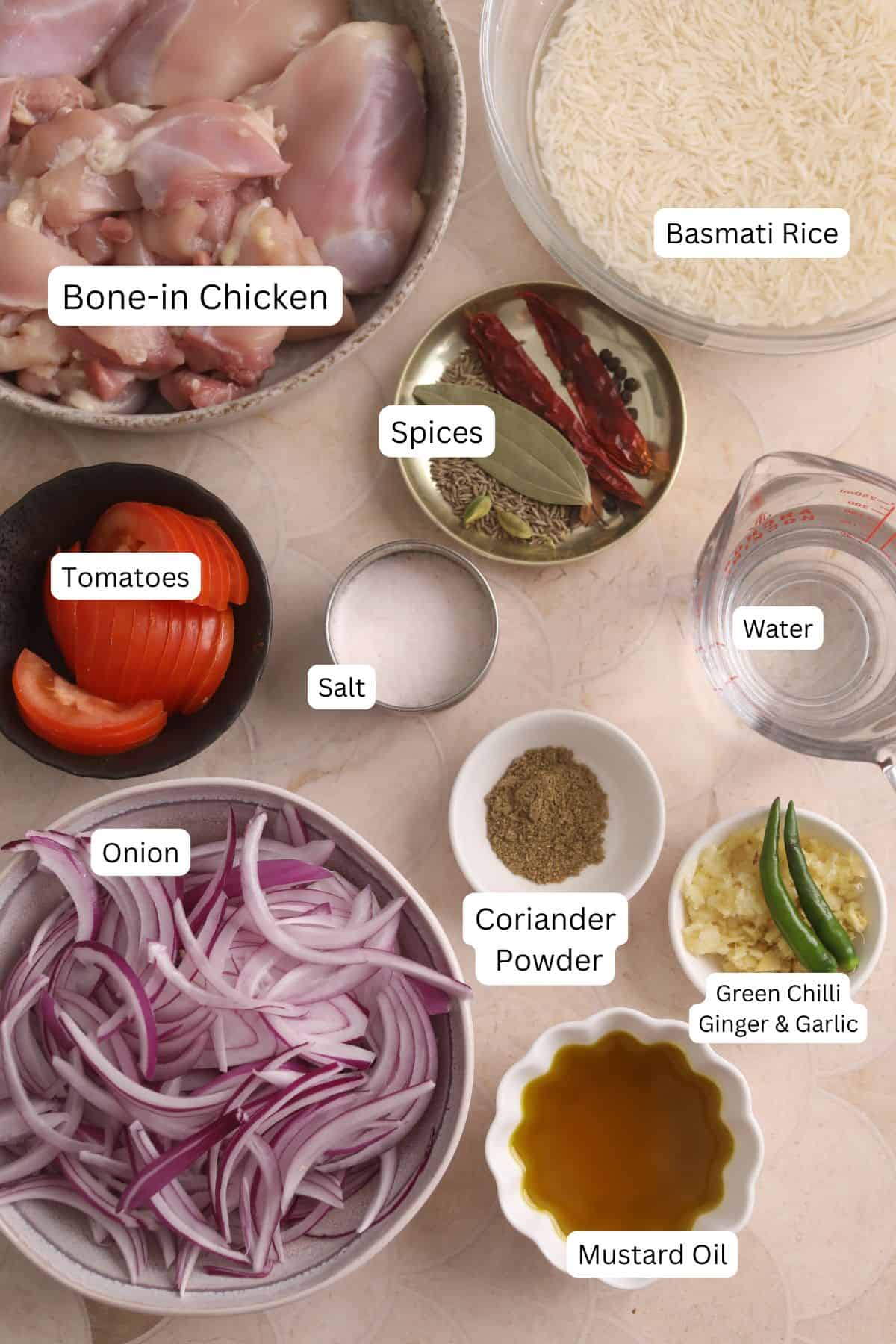
Instructions
Soak The Rice
- Measure the rice and place it in a large bowl. Cover with tap water and gently scrub it with your hands. Initially, the water will turn white and starchy. Repeat this rinsing process, and by the third or fourth rinse, the water should become clear. After rinsing, soak the rice in excess water for about 20-30 minutes.
Make Chicken Masala Base
- In a heavy bottomed, wide cooking pot (I use a 12 inch stainless steel cooking pot), add the mustard oil and let heat up on medium high flame until slightly smoky.
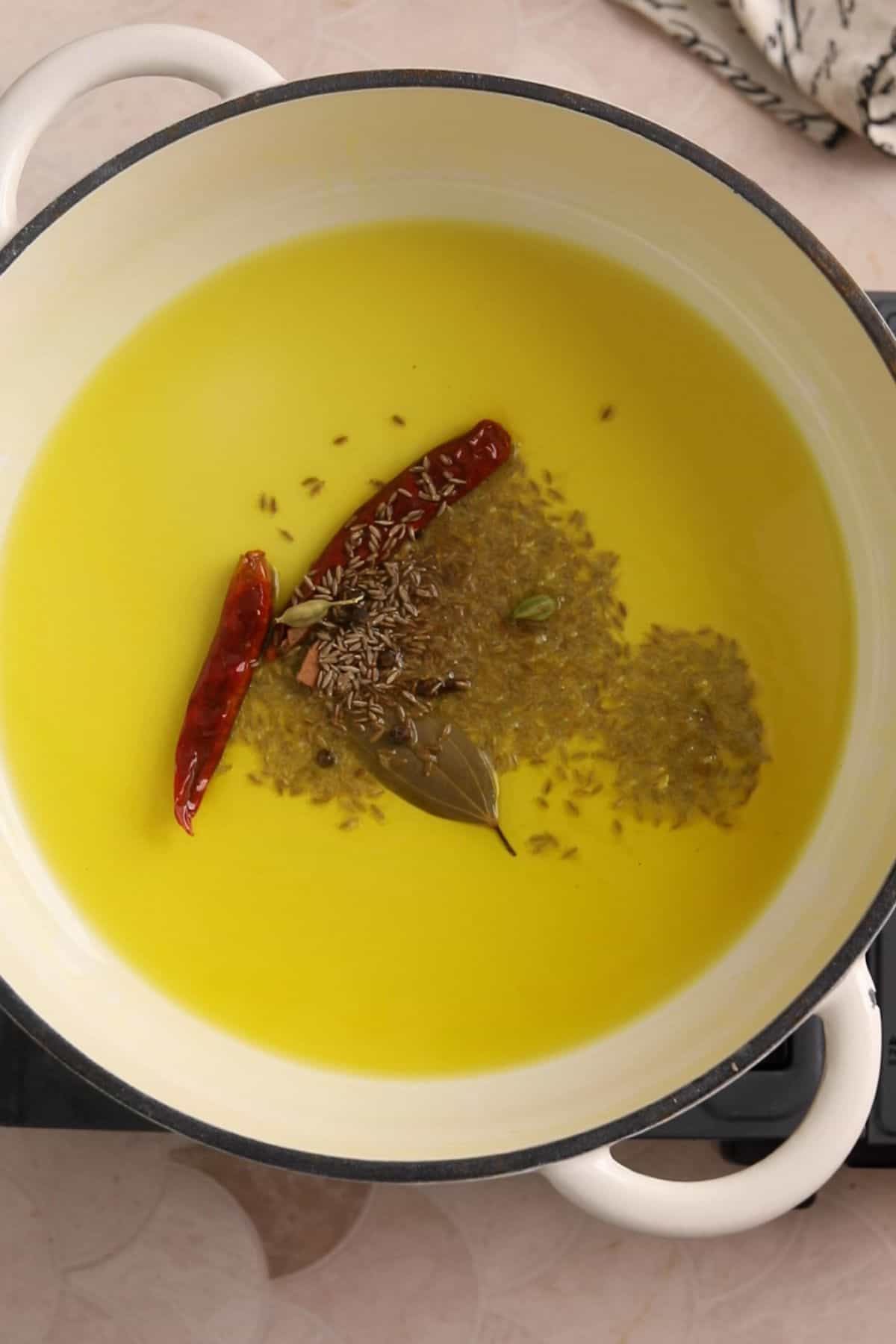
- To the warm oil, carefully add all the whole spices and dried chillies. Stir and fry for 5-10 seconds taking care that the spices don't burn. Whole spices like cloves and black pepper tend to pop when added to hot oil so be careful. Remove the pot from direct heat if needed.
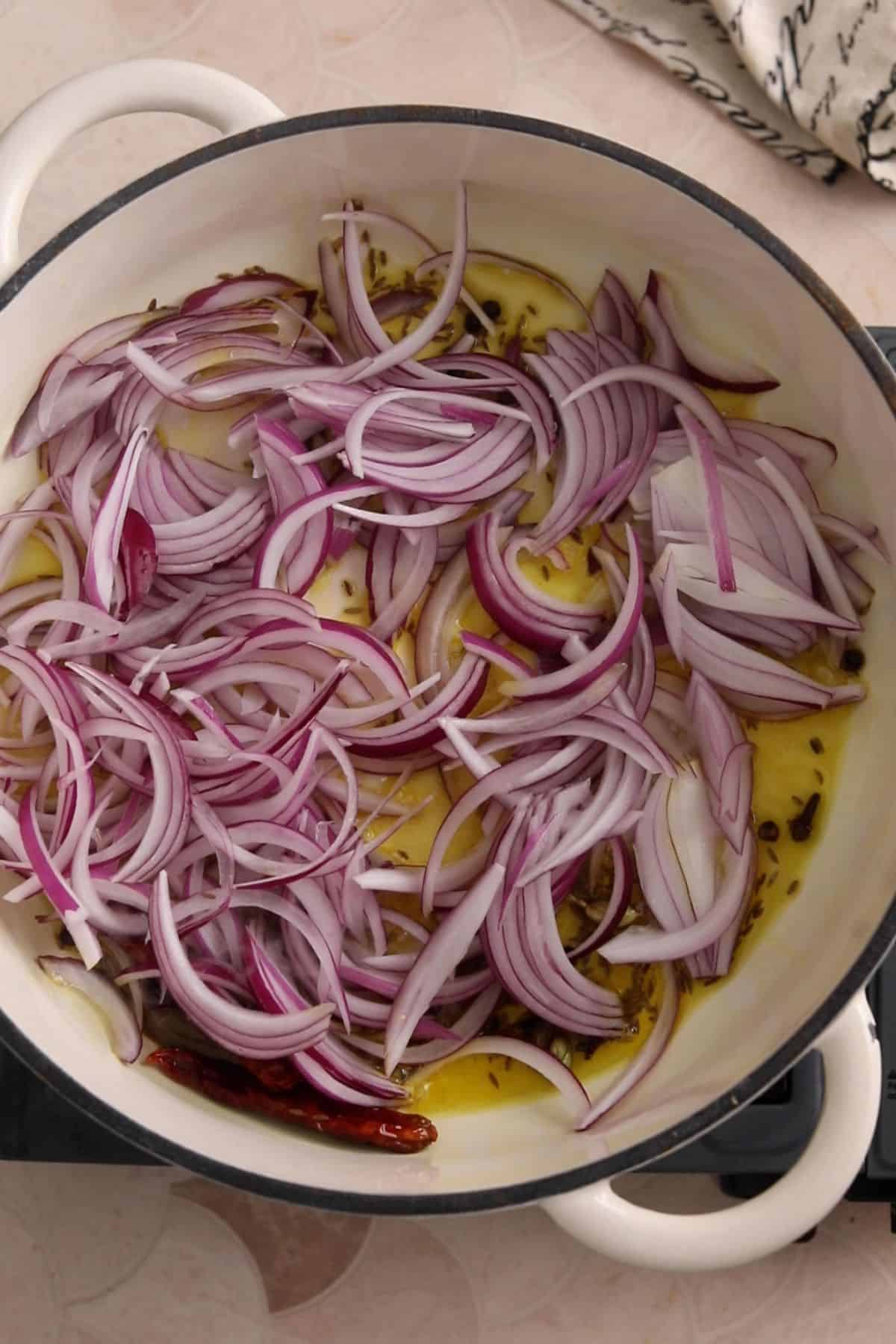
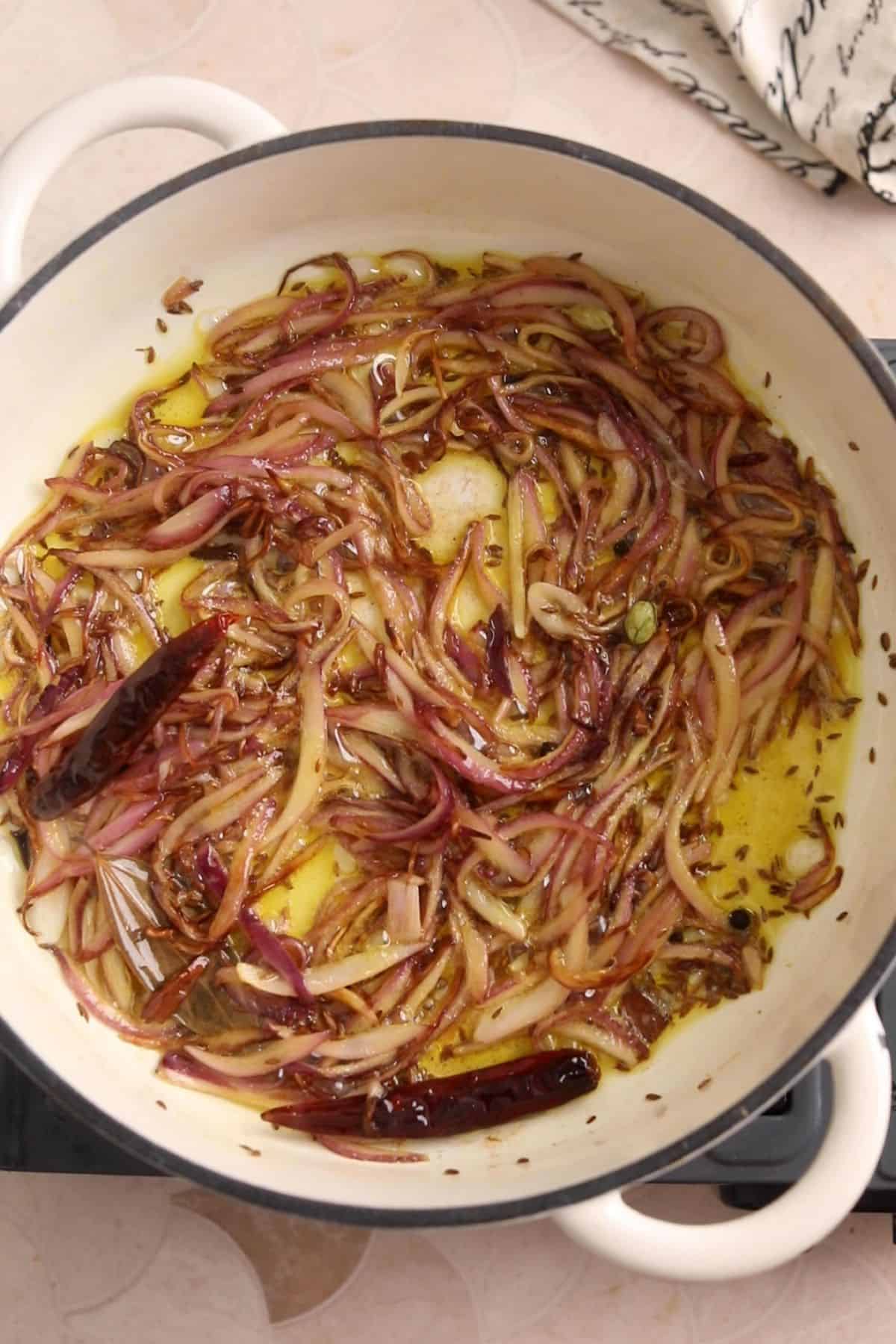
- Add the sliced onions next. For the next 7-10 minutes, we are going to fry the onions in oil and and let them turn golden brown. Stir the onions intermittently and keep an eye. Don't stir too much else the onions start breaking down and turning pasty. Avoid very dark brown or blackish onions else their smell & taste becomes too strong (pulao is a mild tasting dish).
- Add a spalsh of water and place the chicken pieces over the browned onions. Sprinkle ½ teaspoon salt, add garlic paste, chopped ginger, coriander powder, green chillies, and sliced tomatoes.
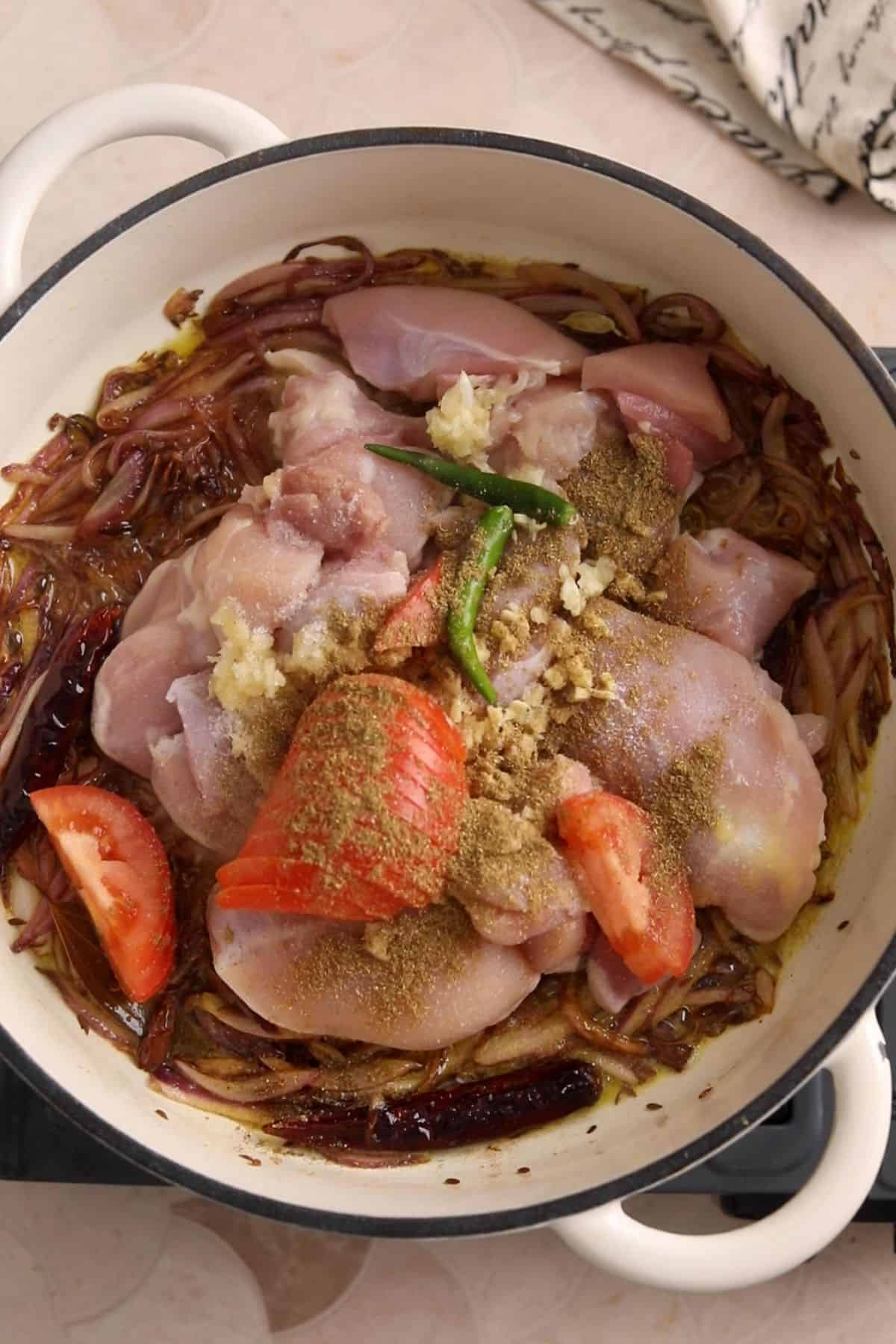
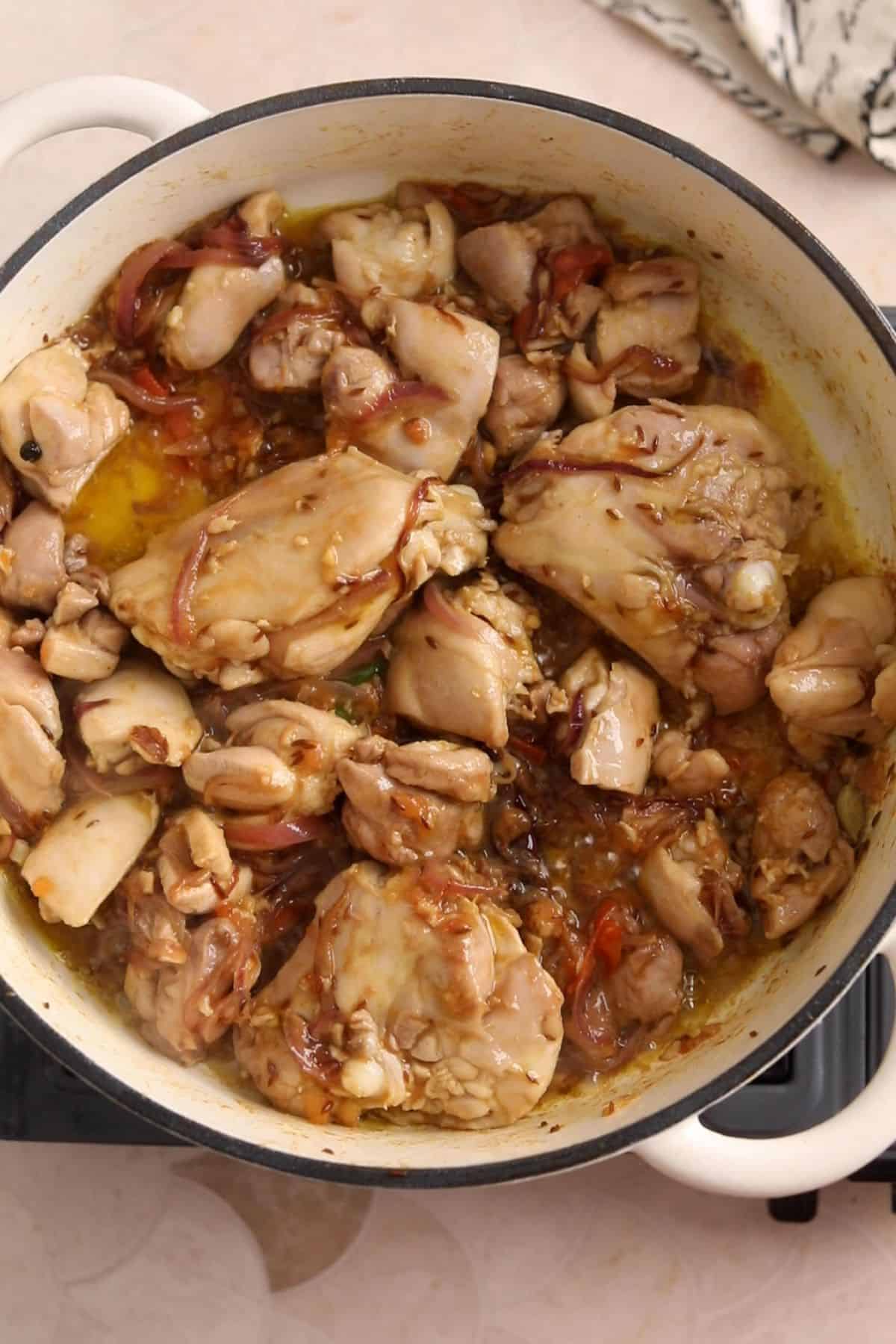
- Now we are going to bhuno (frying on constant heat) the chicken on medium-high heat. Make sure that the flame is constant, if it's too low the chicken will get watery. During the bhunai process, the chicken sears on outside and the juices seals so that they release slowly while the chicken cooks with rice.
Make Chicken Pulao
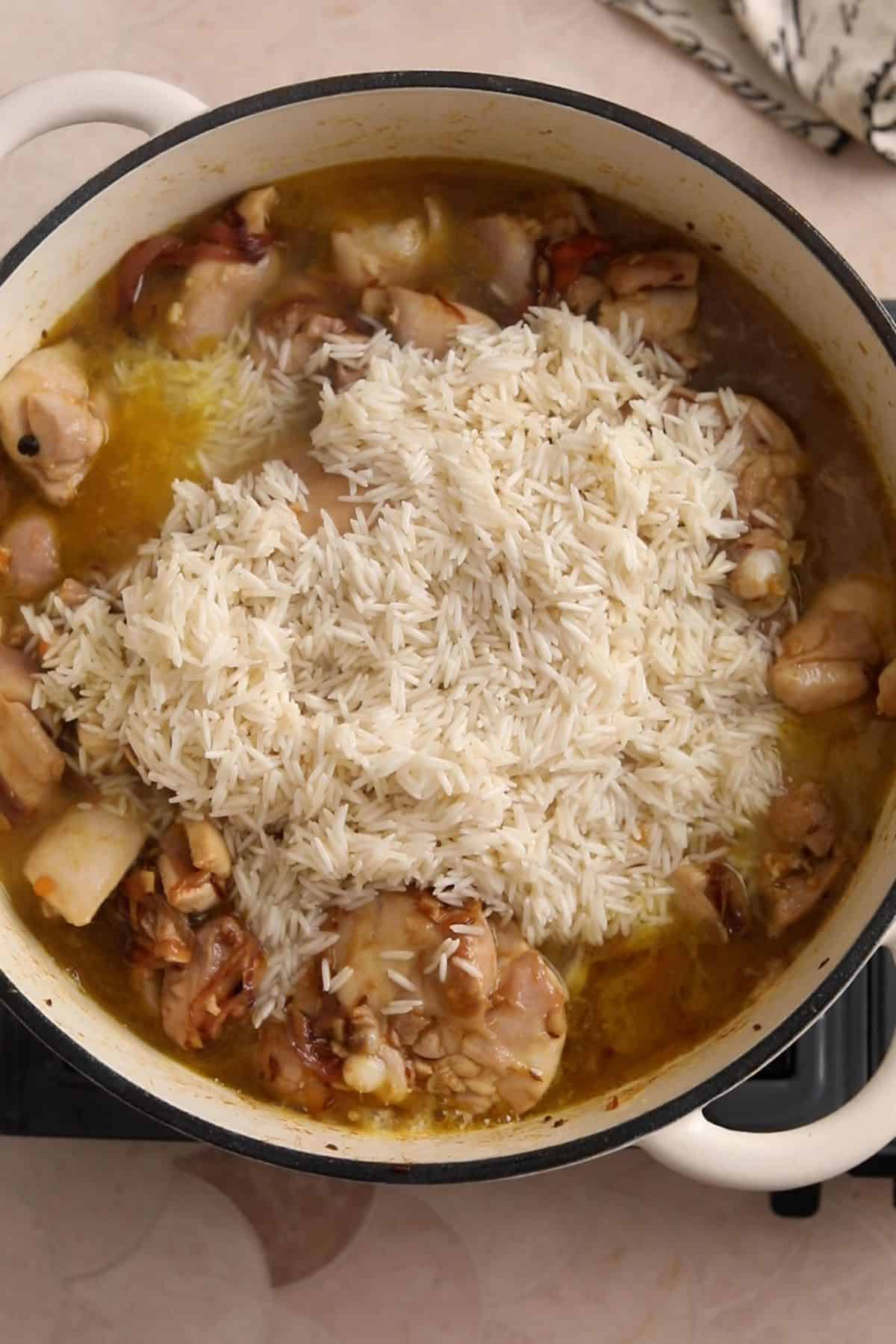
7. Once the chicken is no longer pink and the tomatoes are softened, add the soaked rice.Pour water lime juice (or lemon juice). Stir around gently 1-2 times and taste. Add more salt if needed. At this stage, make sure that the cooking liquid tastes sharp salty- this will make sure that the rice is seasoned properly.
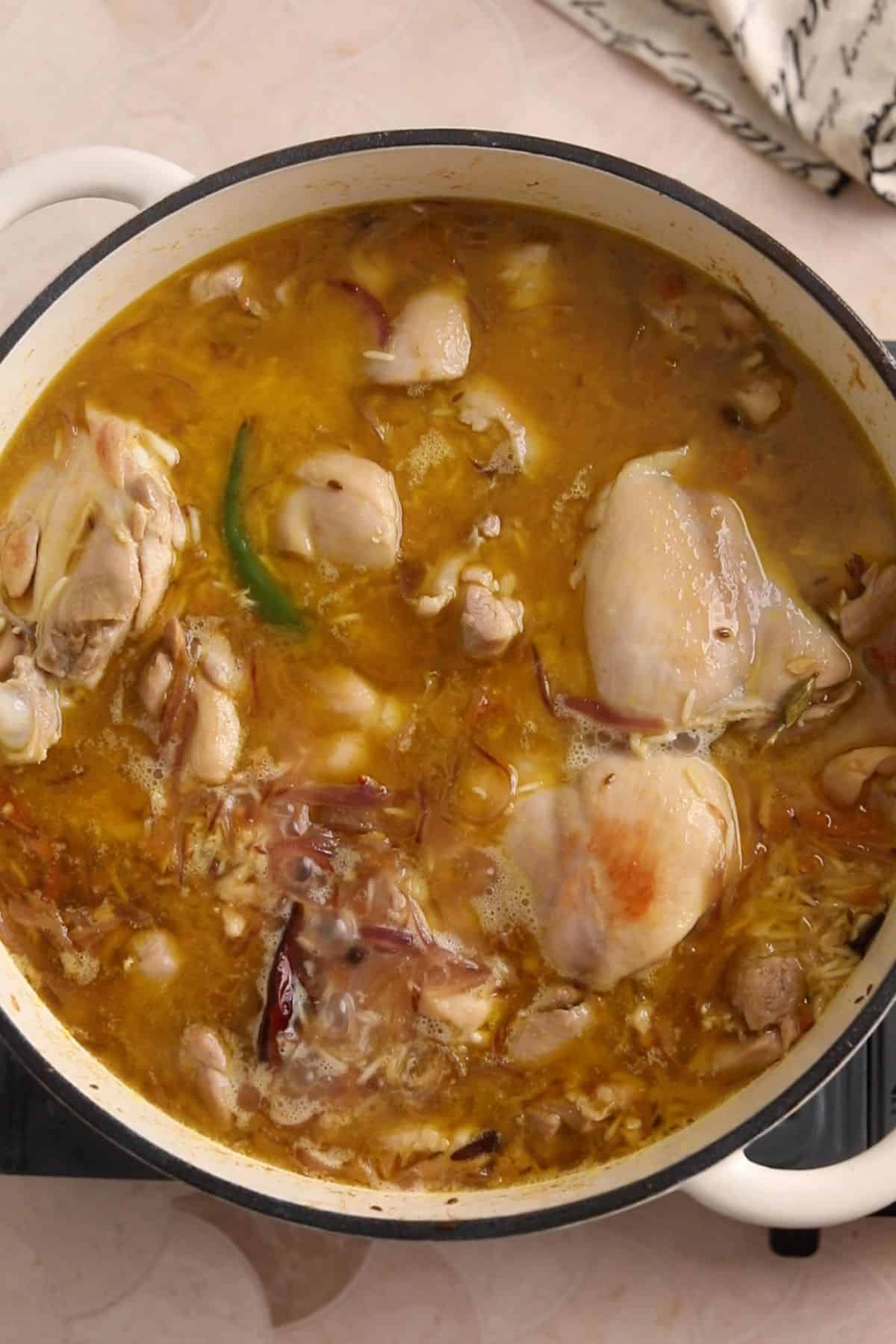
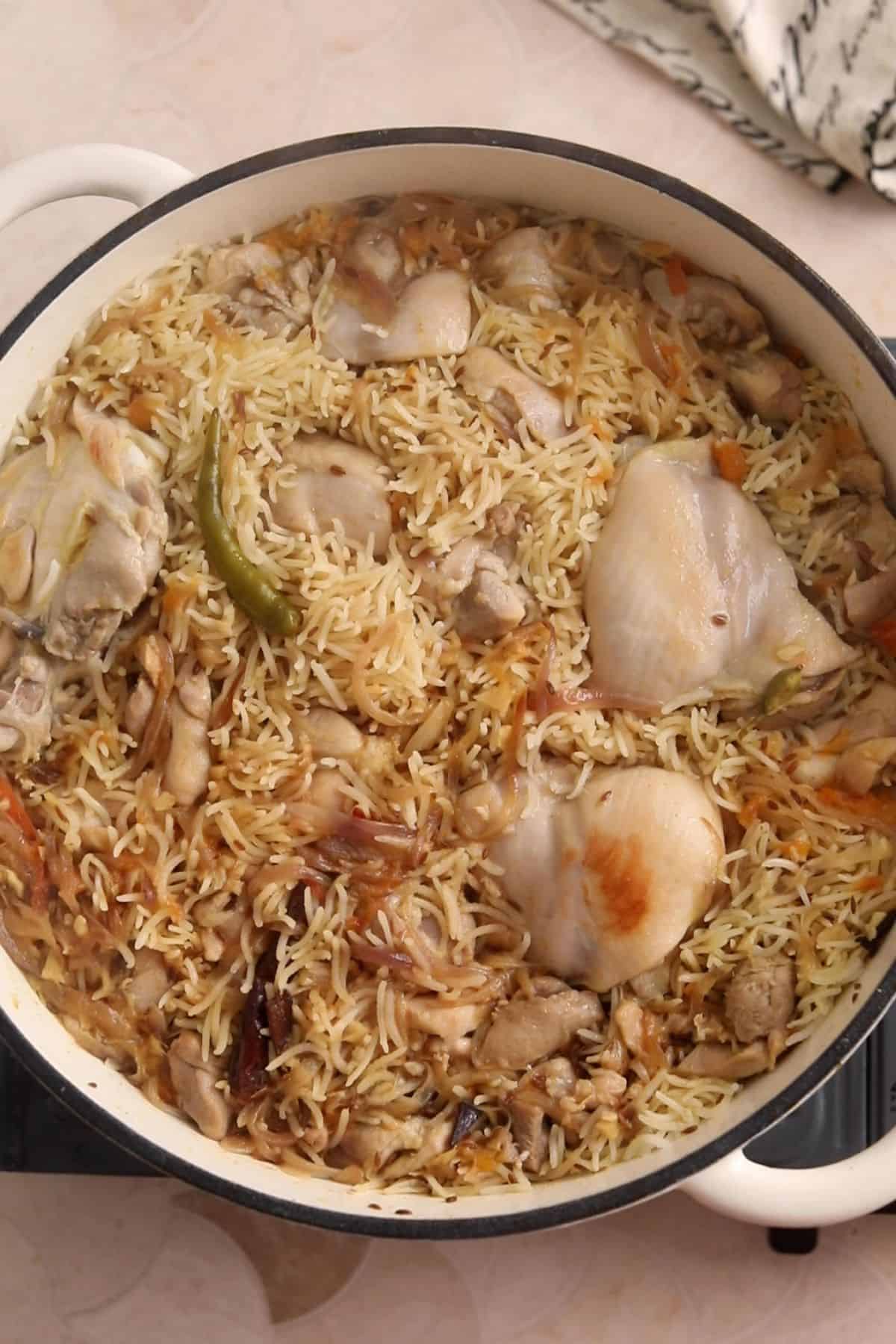
- On low-medium flame, bring the water to a slow boil. Once water is bubbling, cover the pot with a tight-fitting lid. Reduce the heat to lowest, and let the pulao cook for 10-15 minutes or until all the water is absorbed.
- Once the water is fully absorned, switch off the stove. Let the pulao sit, undisturbed, for 15-20 minutes to allow the rice to firm up. Avoid fluffing the rice at this stage, as it is very soft and can easily become mushy.
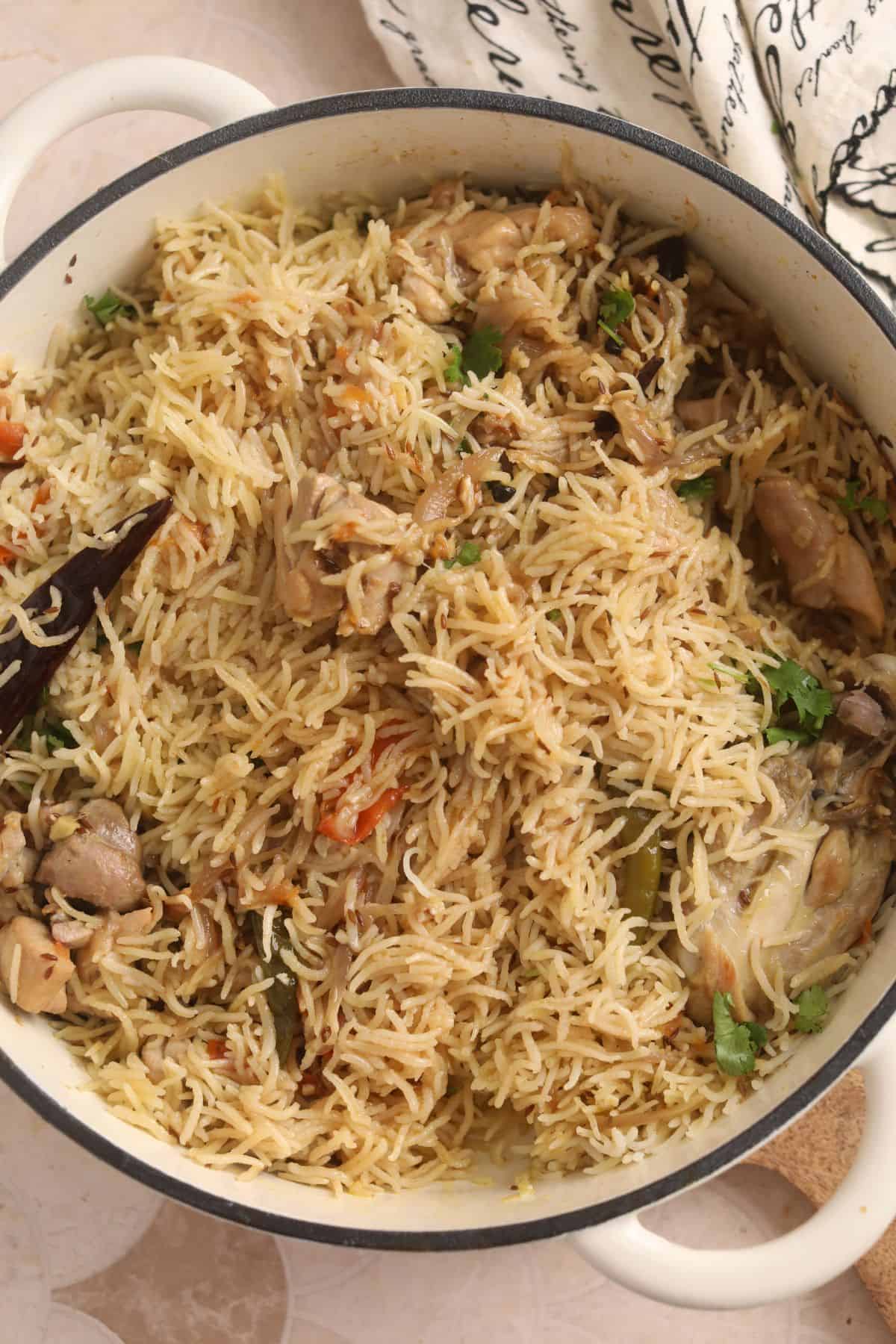
- Gently fluff the rice using a soft spatula or a small saucer, scooping the pulao from the sides of the pot. Garnish the chicken pulao with chopped coriander leaves and serve.
Tanvi's Tips
- Always Soak the Rice: - Soaking softens the rice and it cooks softer and evenly. The soluble starches in rice are far less in soaked rice, which reduces stickiness and results in fluffier rice.
- Don't Skimp on Oil: An optimum quantity of oil is essential for a non sticky, fluffy pulao, as oil prevents the grains from sticking together. Using less oil steals the flavor and might make your pulao taste like steamed rice.
- Use a Wide and Heavy Pot: I use a wide indian wok or a braiser pan. A heavy pot retains heat well, prevents scorching, and ensures even, consistent cooking. As the pulao cooks, the rice grains swell, if your pot is wide, there is space for the grains to remain fluffy without sticking to each other. Also, a wide pot helps in fluffing the pulao post cooking without breaking the grains.

One-Pot Chicken Pulao
Save The Recipe!
Ingredients
- 1 cup long grain aged basmati rice
- ½ cup oil mustard oil (If not using mustard oil, use ⅓ cup cooking oil + 2 tablespoon ghee)
- 1 large (195g) onion I use red onion, thinly sliced
- 500 g skinless, bone-in chicken use 400-450g boneless chicken thighs instead
- ½ tablespoon garlic paste
- 1 inch ginger julinned or chopped, divided
- 1 (80g) tomato I use roma tomato, halved lengthwise and sliced
- ¾ teaspoon coriander powder
- 2-3 indian green chilies (hot), I add whole chilies but you could slit them for extra kick, adjust quantity to taste
- 1.5 teaspoon salt adjust quantity to taste, divided
- 1.5 cup warm water You might need to adjust slightly depending on how much water you see in the pot after bhunai of chicken and yogurt. Use 1.75 cup water for softer pulao.
Whole Spices
- 2-3 whole dried red kashmiri chillies or 1 teaspoon red chili flakes. Adjust quantity to taste
- 1 teaspoon cumin seeds
- 1 black cardamom or use 3-4 green cardamom if you do not have black cardamom
- ½ inch cinnamon stick
- 4 cloves
- 1 large bay leaf
- 8-10 black peppercorns
Instructions
Wash and Soak Basmati Rice
- Measure the rice and add it to a large bowl. Cover with tap water and gently rub the grains between your fingers. The water will look cloudy at firs. Drain and repeat until, by the third or fourth rinse, the water runs mostly clear. Soak the rice in plenty of fresh water for 20-30 minutes. You can start working on the recipe while the rice soaks.
Make The Chicken Masala base
- Heat mustard oil in a wide, heavy-bottomed pot (a 12-inch or large cooking pot works well) over medium-high heat until it just begins to smoke.
- Carefully add the whole spices and dried chillies to the hot oil. Fry for 5-10 seconds, stirring gently and watching closely, as spices like cloves and black pepper can pop. Remove the pot from the heat briefly if needed to prevent burning.
- Add the sliced onions and cook for 7-10 minutes, stirring occasionally, until they turn a light golden brown. Avoid over-stirring so the onions don't break down, and don't let them get too dark. We want warm tint on pulao rice and the flavors to stay mild and fragrant. This step takes a bit of time and patience but it is a key step since the color of onion contributes to the color of your pulao. Avoid very dark brown or blackish onions else their smell & taste becomes too strong.
- Splash in a little water(¼ cup), then place the chicken pieces over the onions. Add ½ teaspoon salt, garlic paste, chopped ginger, coriander powder, green chillies, and sliced tomatoes
- Now we are going to do bhuno (frying on constant heat) the chicken on medium-high heat. Cook the chicken on steady heat, stirring occasionally. This bhunai step helps the chicken sear lightly so its juices release slowly as it cooks, rather than turning watery.Continue until the chicken is no longer pink and the tomatoes have softened and broken down into the masala.
- Add the soaked, drained rice to the pot. Pour in warm water along with lime juice (or lemon juice). Add the remaining salt. Gently stir once or twice to combine. Make sure that all the rice grains are in water (they tend to sit on top of chicken pieces). Taste the cooking liquid and adjust salt if needed. This is the time to season your pulao perfectly! The cooking liquid should taste slightly sharp at this stage to ensure the rice cooks up flavorful.
- Bring the water to a gentle boil over low-medium heat. Once you see steady bubbling, cover the pot with a tight-fitting lid, reduce the heat to the lowest setting, and cook for 10-15 minutes, or until all the water is absorbed.
- Turn off the heat and let the pulao rest, undisturbed, for 15-20 minutes. This allows the rice to set and firm up. Fluffing too early can make it mushy.
- Gently fluff the rice using a soft spatula or a small saucer, scooping the pulao from the side of the pot.Garnish the chicken pulao with chopped coriander leaves. Serve it sides(see notes).
Notes
- Using Boneless Chicken - You could easily use bone less chicken thighs in this recipe. I avoid chicken breast since it tends to get stringy and dries up by the time pulao finishes cooking. Cut chicken thighs into 2 -2.5 inch pieces and adjust cooking time.
- Always Soak the Rice: - Soaking softens the rice, ensuring even cooking. The soluble starches in rice are removed , which reduces stickiness and results in fluffier rice. Additionally, soaked rice cooks faster and has a softer texture.
- Don't Skimp on Oil: An optimum quantity of oil is essential for a non sticky, fluffy pulao, as oil prevents the grains from sticking together. Using less oil steals the flavor and might make your pulao taste like steamed rice.
- Use a Wide and Heavy Pot: I cannot stress this enough. A wide (12 inch or larger works excellent for stovetop cooking. A heavy pot retains heat well, prevents scorching, and ensures even, consistent cooking. As the pulao cooks, the rice grains swell, if your pot is wide, there is space for the grains to remain fluffy without sticking to each other. Also, a wider pot helps in fluffing the pulao post cooking without breaking the rice grain.



Edith Kire says
Hi is it ok just to eat Chicken pulou on its own? as opposed to having chutney or raita with it?
Tanvi Srivastava says
Absolutely!You can eat it on its own.Sides are optional.
Sally Wignall says
My family enjoyed this recipe. Thank you