

Sarson ka Saag is a classic Punjabi winter dish made with mustard greens that are slow-cooked until earthy, and deeply flavorful. Traditionally, sarson da saag is served with homemade soft makki roti, white butter, cauliflower & turnip winter pickles, and jaggery, it is all about comforting flavors and the right texture.
My authentic sarson ka saag recipe stays true to how it is cooked in Punjabi homes. The greens are slow cooked and not pureed smooth but kept slightly coarse, so that the saag turns out thick and hearty. The tempering is chunky to keep the rustic texture intact.

If you are looking to learn how to make sarson ka saag at home with practical tips, ingredient swaps, and the right balance of pungency and richness, this recipe will walk you through it step by step. I prefer to slow cook this dish. However, it can be prepared in instant pot or pressure cooker if you are short on time. I've included instructions for both methods in this post.
For me, saag belongs to the colder months. Growing up, the only version I knew was cooked slowly with love, ghee, and an abundance of fresh greens & root vegetables (such as turnip and radishes) that the winter markets offered at their best. I like to prepare a larger batch as part of my meal prep. It keeps well in the fridge for four to five days and tastes even better as the flavors deepen over time.
About My Recipe
- I prefer to slow cook the greens and vegetables, and it makes a noticeable difference to the final flavor. This unhurried process brings out a beautiful tender texture of the greens, particularly the stems. You do not need to stand over the pot, just check in occasionally as everything cooks down and comes together.
- My saag recipe is very simple. I learned to make it from our house cook during the few years we lived in Punjab. One thing he always emphasized stayed with me. Which is that the saag should taste of greens, and not spices.
- Because of that, I do not use any powdered spices at all. When the greens are allowed to shine, the saag tastes fresh, clean, and deeply satisfying without being heavy. I temper mine in an authentic punjabi way in pure mustard oil, browned onion, ginger, garlic, etc.
- Lastly, true sarson saag lovers are often divided on this, but I do add a small amount of tomato similar to my how mom did. It brings a gentle tang that I really enjoy. That said, you can easily leave it out and still end up with a delicious pot of saag.

Ingredients


Notes
- Until a few years back, or when I originally shared this recipe, I wasn't able to find bathua greens (also known as white goosefoot greens). But, now I am able to so if you watch the video you will see me adding bathua in there.
- Saag is very accepting of what you have on hand. Along with mustard and spinach, you can easily add kale, turnip greens, radish greens, or even collard greens to the mix. Just keep in mind that each green brings its own character, so the taste and texture of the saag will naturally change depending on what goes into the pot.
- Make sure that the mooli (daikon) isnt too pungent else it will affect the taste of saag.
- Lastly, making sarson saag is not hard though a bit time consuming. The biggest effort is in washing and preparing the leafy greens. You have to clean them multiple times to getrid of every speck of dirt.
Selecting Greens for Saag
Few of the most asked questions whenever I share saag on my social media are about where I buy the greens and how I select them. Below are few pointers to help you make a selection next time you are at store.
- Pick curly leaf mustard (as shown in picture above) in the greens aisle of superstores. I buy from stores like Smiths, Whole foods or Sprouts. They may not be exactly like sarson leaves back home in India, but the flavor comes remarkably close and absolutely does the job. When they're in season, the stems are especially juicy and fleshy, which makes them even better to cook with.
- A second great option is rapini greens. These are easy to find in both American grocery stores and Indian stores. You'll recognize them by the small, broccoli-like flowers at the ends of the stems.
- Trader Joe's also carries a seasonal mix called "Southern Greens," which works very well for making saag. It's a blend of mustard greens, spinach, turnip greens, and collard greens. The greens come roughly chopped and pre-washed, hence super convenient. If you prefer a slightly sweeter saag, you can increase the proportion of spinach a bit when using this mix.
- For a more traditional flavor, keep the quantity of mustard greens higher than all the other greens or vegetables you're adding. Spinach and other greens soften the pungency of mustard leaves and add a smoother texture, but too much of them can mellow the signature bite that makes saag truly special.
How To Make Sarson Saag
Prepare The Vegetables - I often wash and dry the greens a few hours or even a day in advance. If mustard stems feel too fibrous, use just the leaves and roughly chop them. If you are able to use stems, peel and roughly chop tender parts of the stems and discard the very tough ones. Do the same for spinach. For bathua, use only the leaves.
Soak the greens in a large pot of cold water, swish the greens around, and rub them gently against each other to to remove the grit for a few minutes, then rinse. Repeat until the water looks clean and there's no dirt collecting at the bottom. Transfer to a colander to drain.

Stove Top Saag
Add all the green leaves and stems to a large pot or dutch oven (5qt or larger). Add daikon, ghee, ginger, turnip, garlic, salt and cumin. Cover and cook the saag until everything is mushy. It takes about 25-35 minutes on low medium heat. While the saag is boiling, dry roast the makki atta to be added later. Adding makki atta helps thicken the saag and also imparts a unique velvety consistency to the cooked saag.
Tip - If you like gentle heat in your saag, you could add few green chillies while boiling. I leave them out.
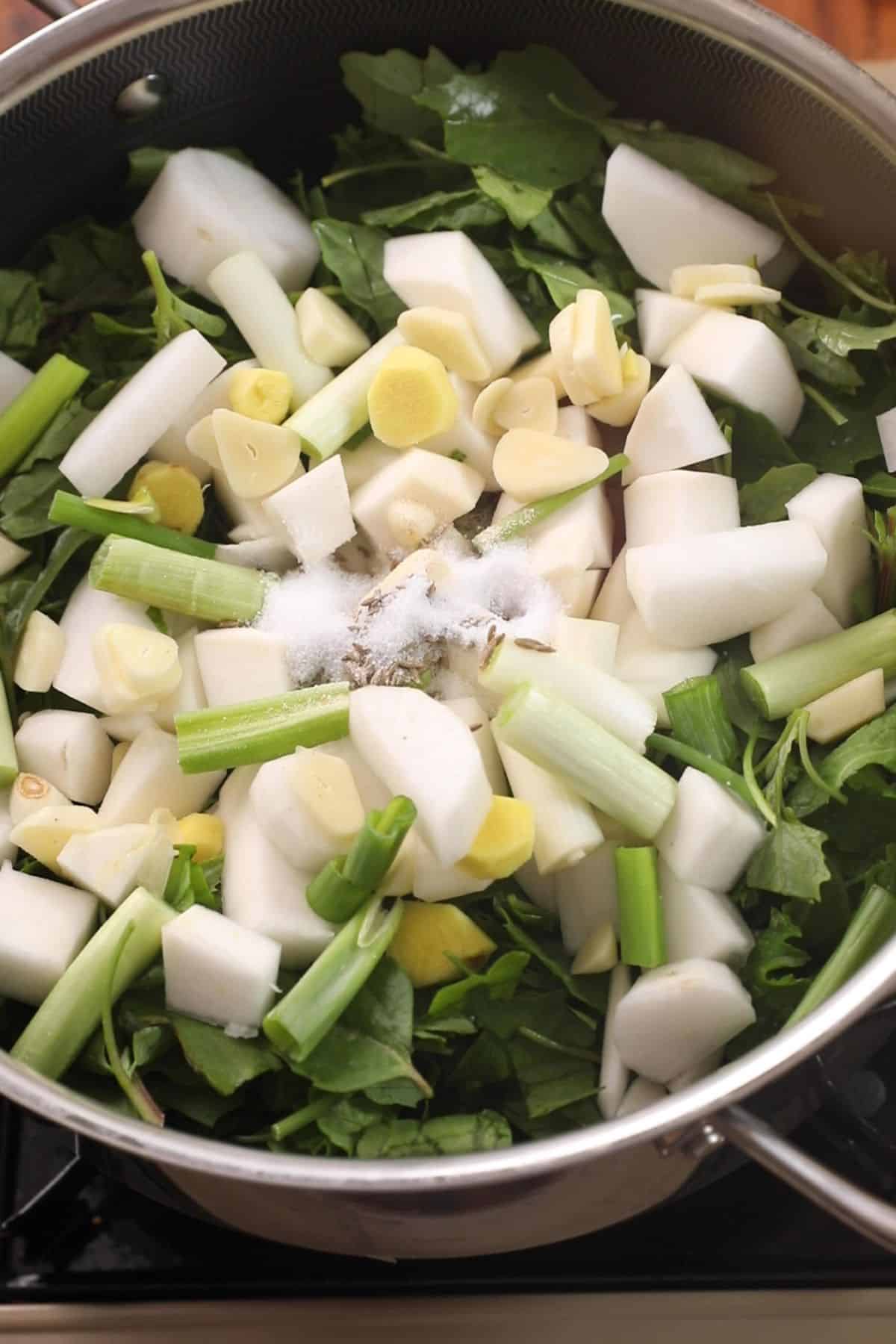
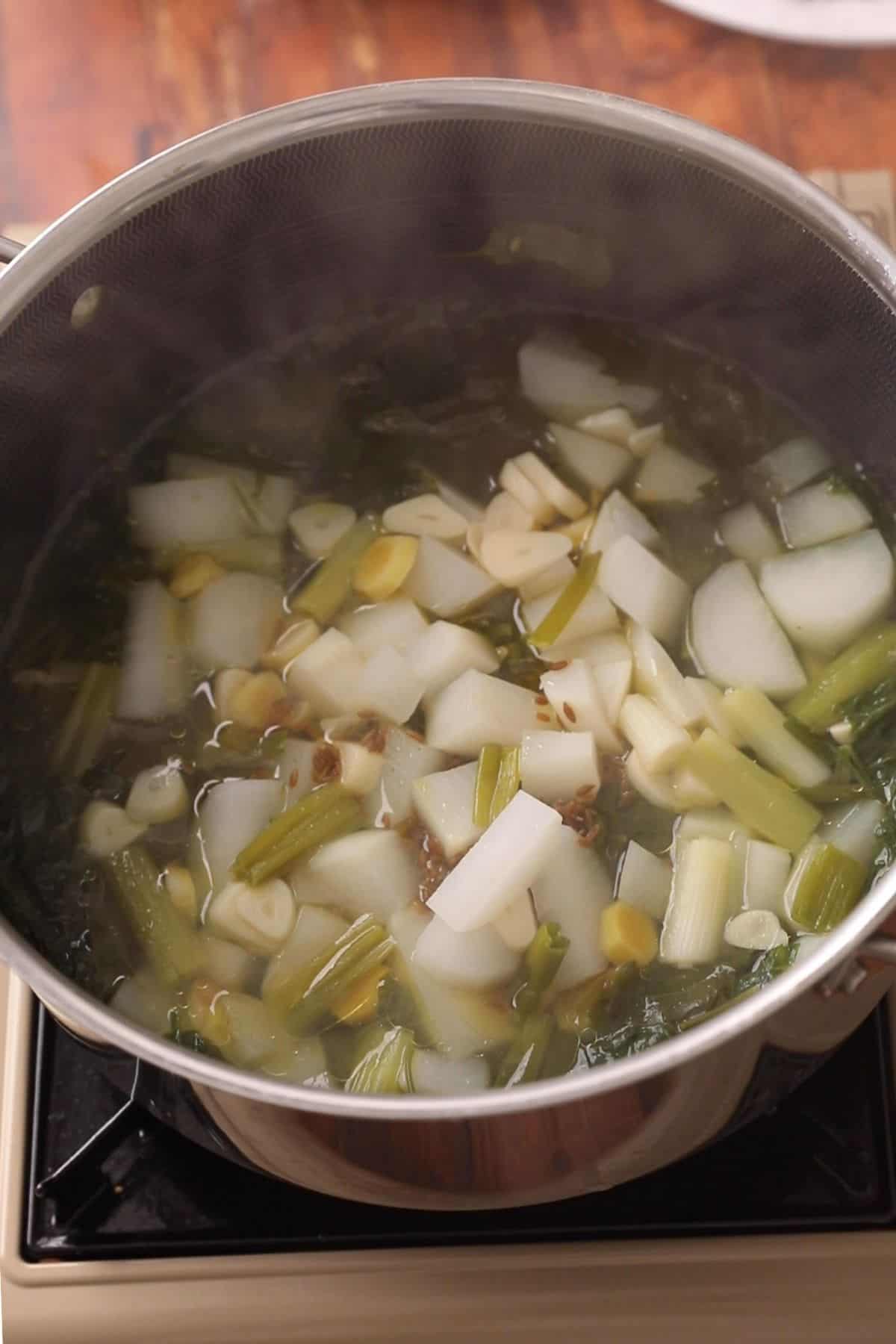
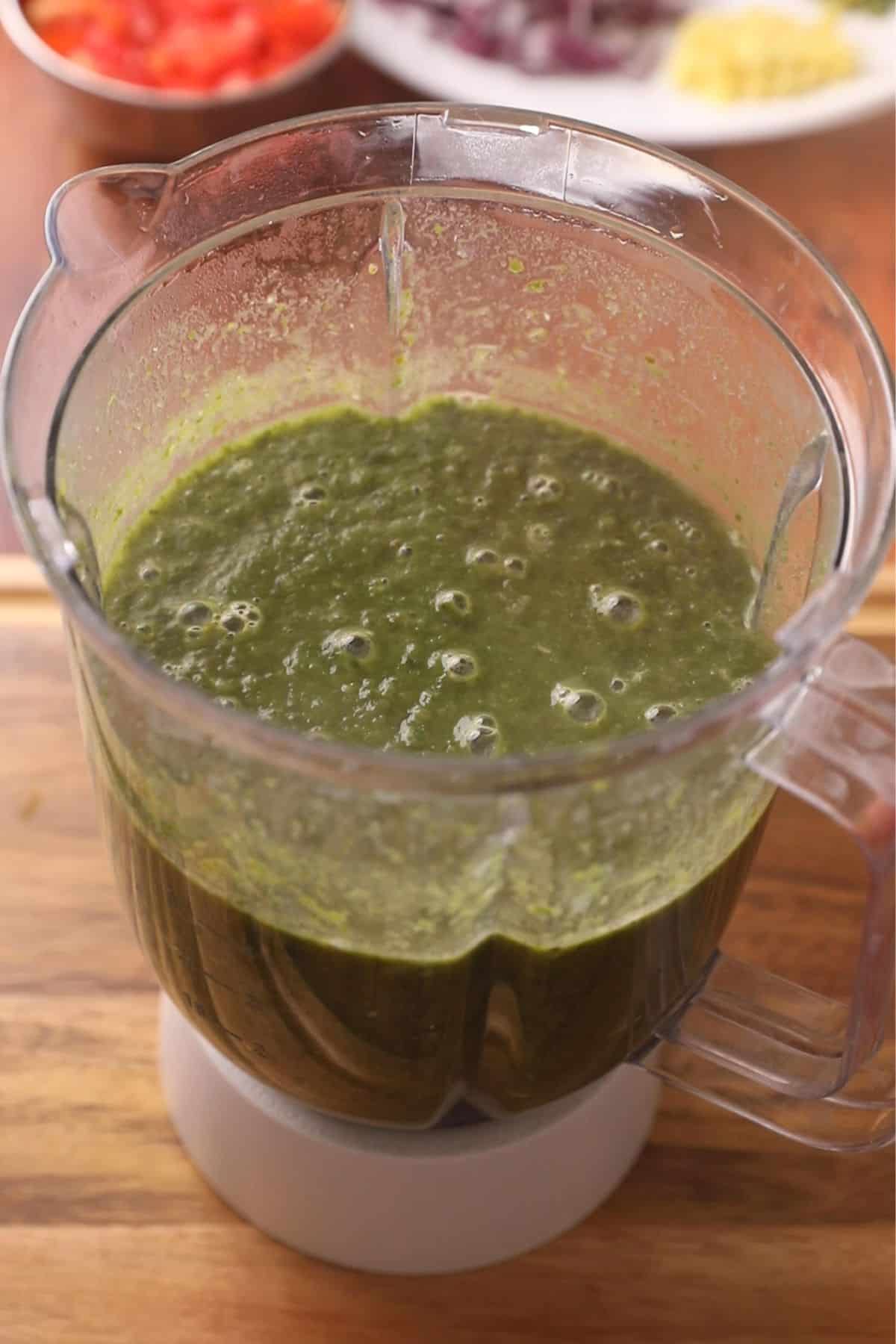
Traditionally, boiled saag is mashed using a long large wooden whisk or paddle to break it down to a puree. This process is called "ghotana". However I use my food processor, immesion blender to coarsley process the greens. Avoid a silky smooth puree. It should "plop" when poured from a ladle instead of ribbon like flow.
Tadka (Saag Tempering)
Tempering is where the real taste of the saag lies.Prepare the tadka with a generous amount of mustard oil and onions, ginger, green chilies and tomatoes.
- In a wide pan, warm up the mustard oil till lightly smoky.
- Temper with cumin and dried chilies. Add the chopped onions next and fry them over medium heat until golden brown.
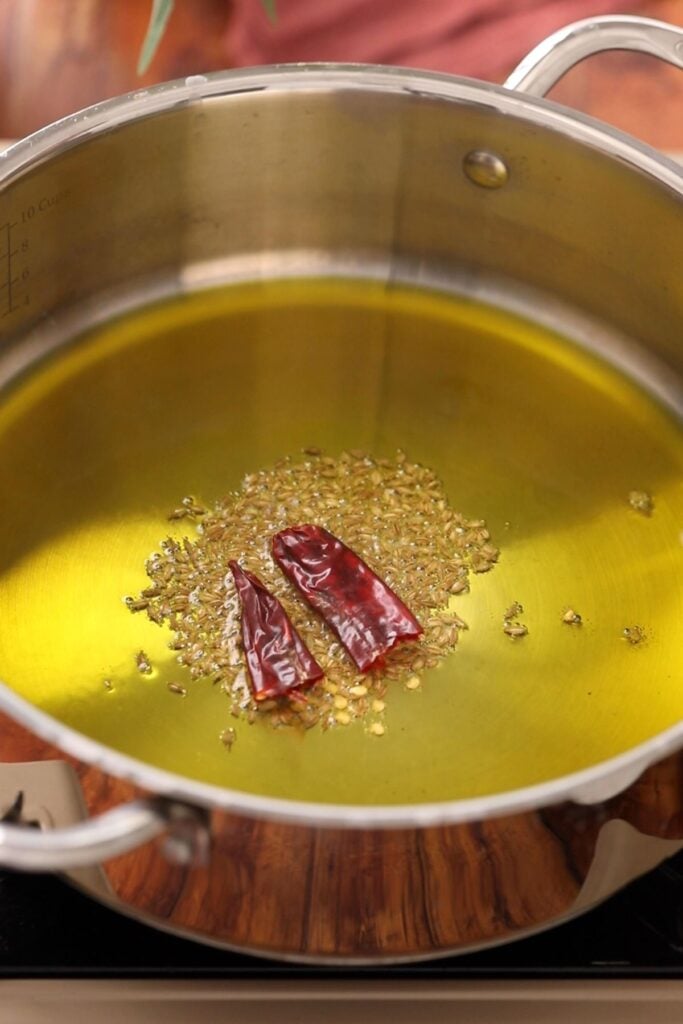
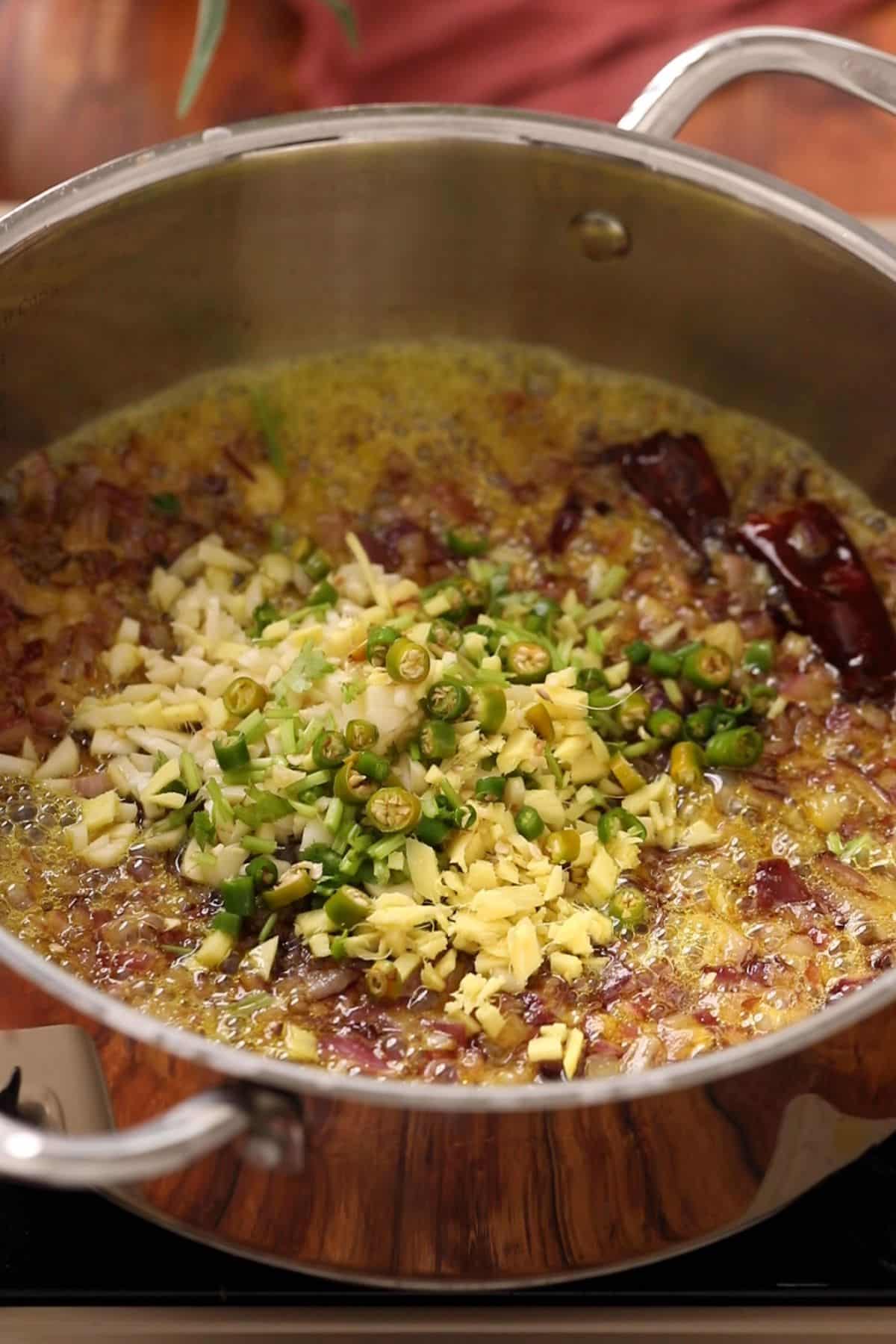
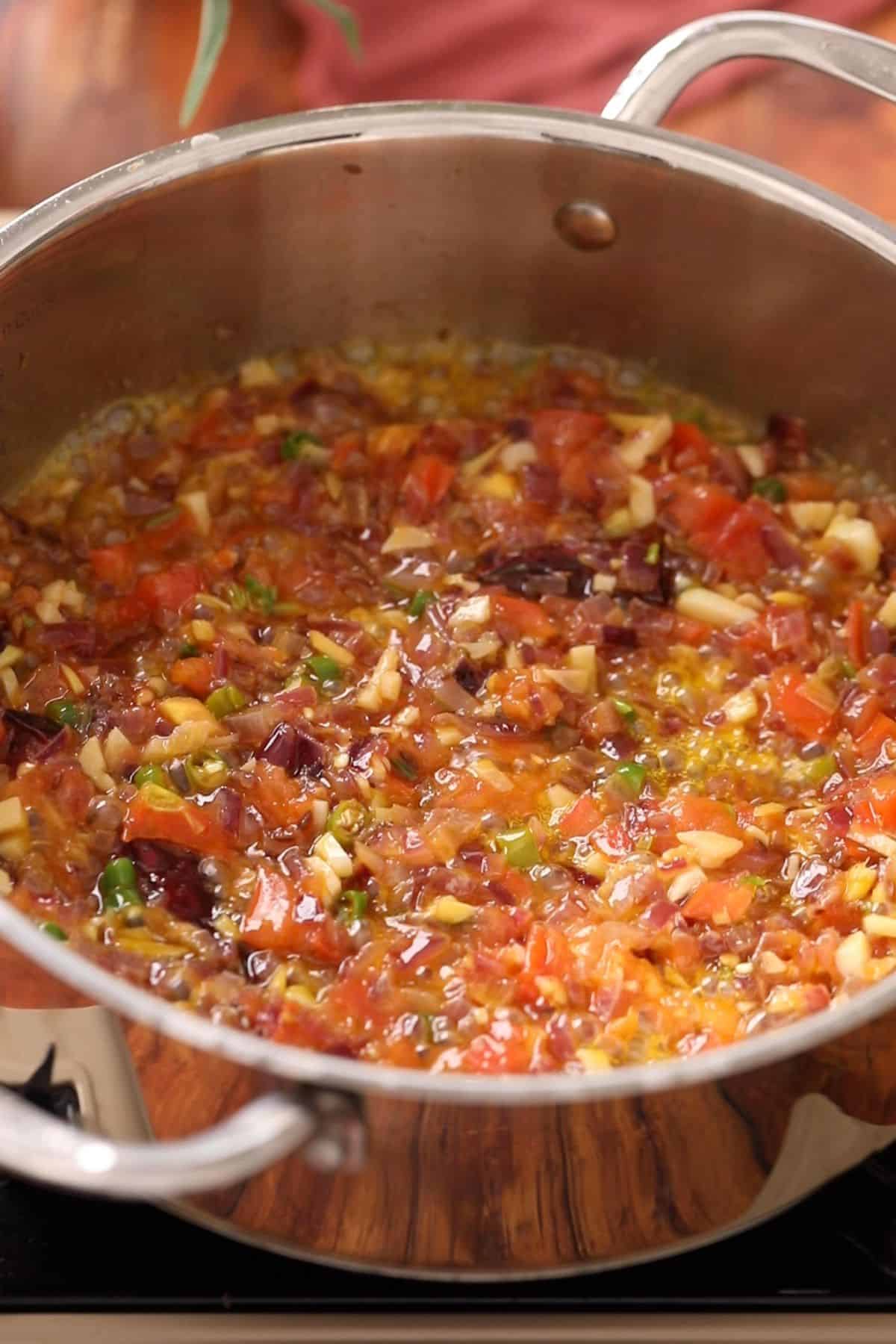
- Add the chopped ginger, garlic, cilantro stems and green chilies. Fry for a minute or so.
- Next, add the tomatoes and cook while stirring until they soften. Don't cook too much. The tempering needs to be chunky.
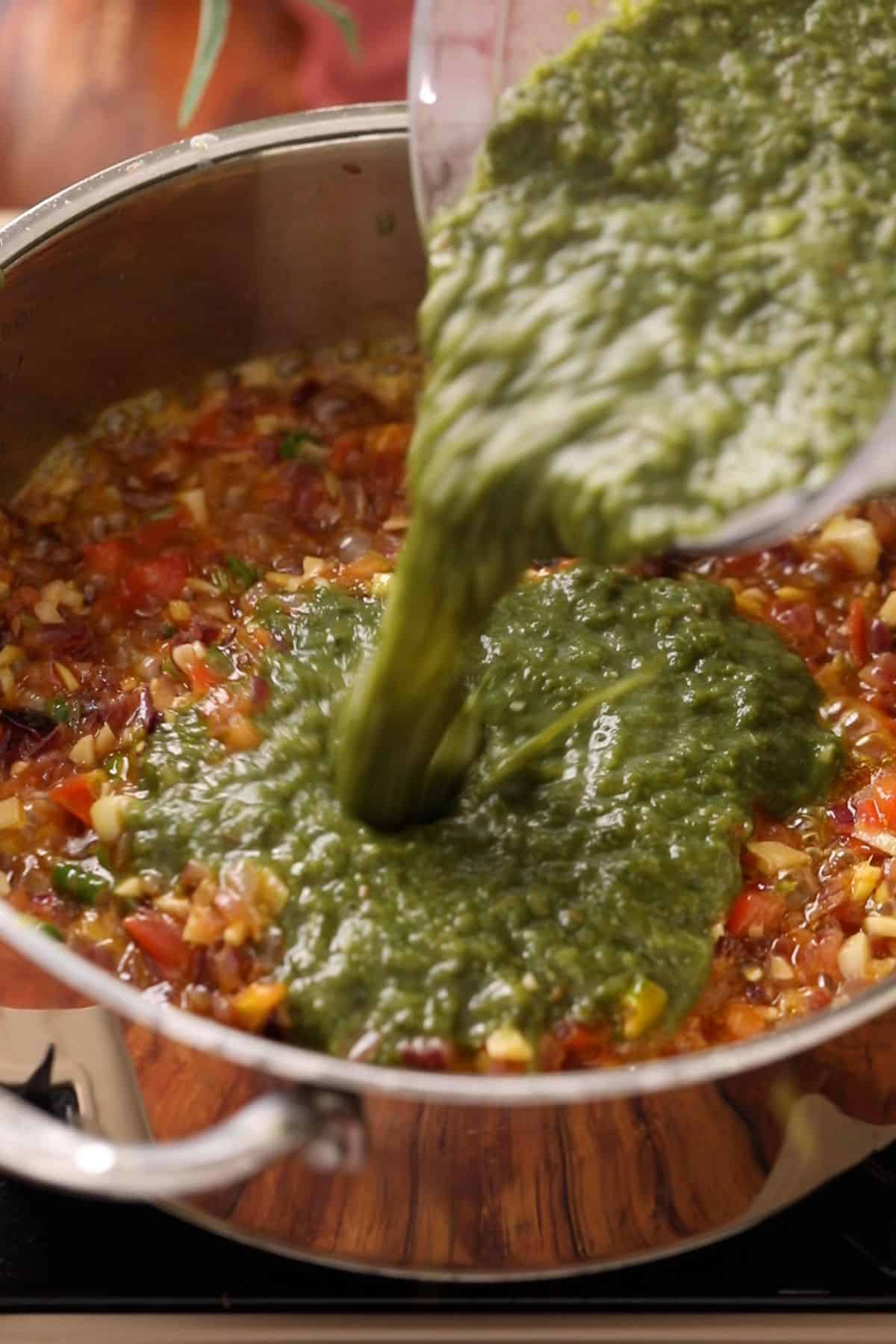
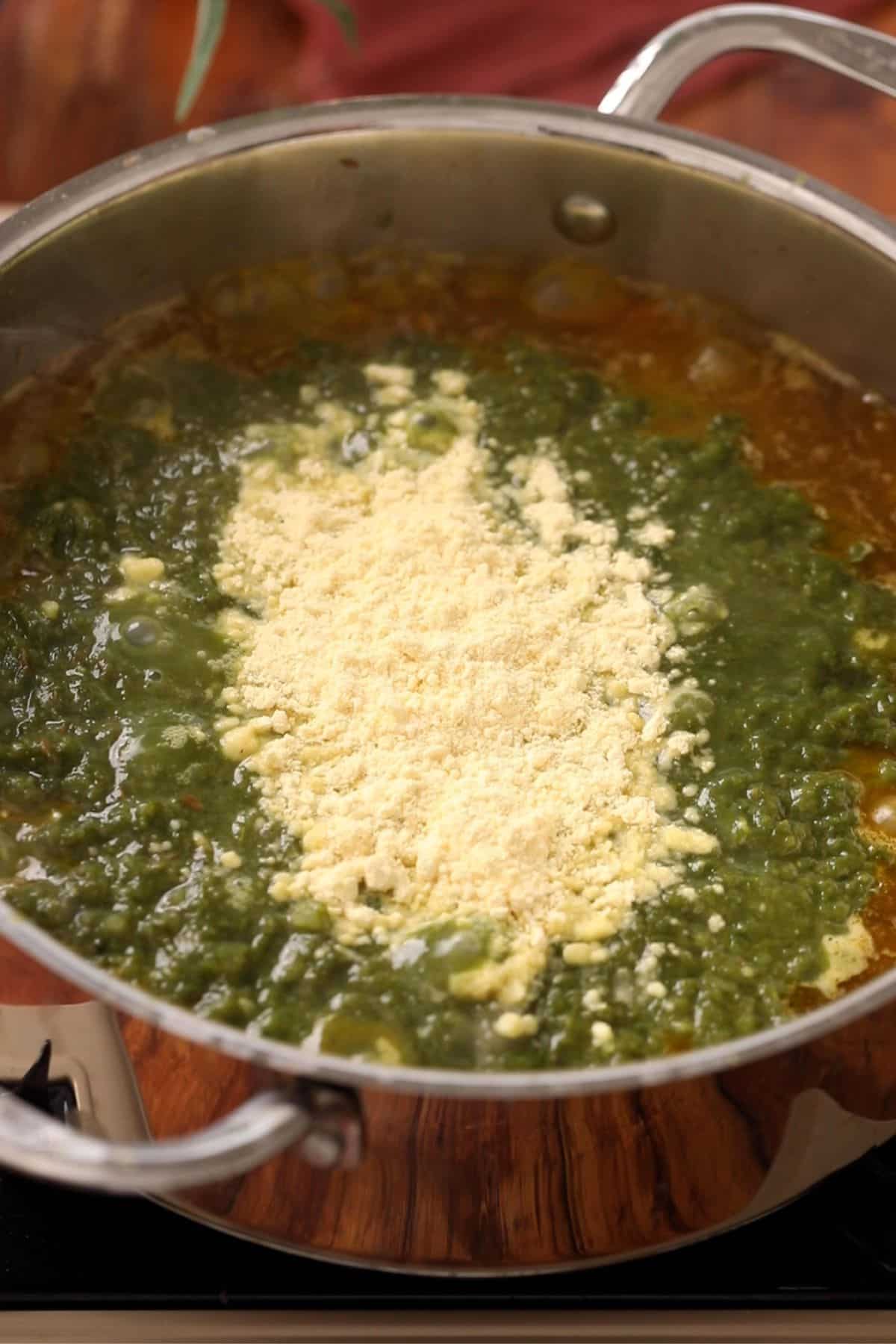
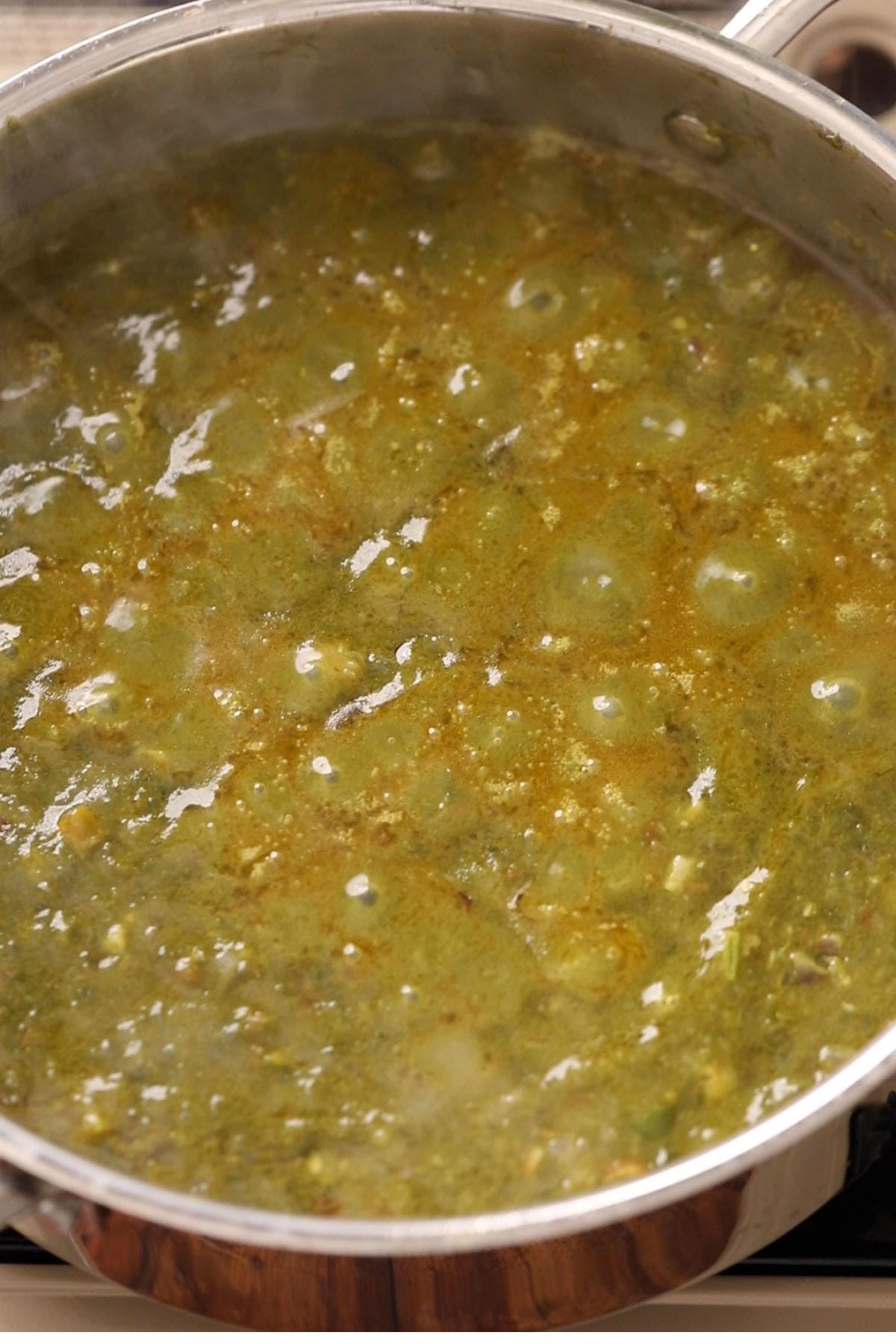
- Pour the mashed saag and add the roasted makki atta. Stir very well. Simmer the saag for 8-10 minutes. As the saag cooks, it will thicken and acquire a thickish yet pourable consistency. You can add ¼ to ½ cup hot water to adjust the consistency if desired.
- Once simmered, taste the saag and adjust the salt if needed. Finish with butter. Serve warm with makki roti.
Do not skimp on oil, ghee or butter, as fat adds richness and depth to sarson saag. If you want a plant-based version, vegan butter is a good substitute for ghee and butter.
Instant Pot Sarson Saag
On busy days, you could cook the saag in instant pot or pressure cooker. For reference I use a 6 qt Instant pot. Detailed instructions are written in the recipe card. Essentially, you are cuttin down the greens boiling time by using IP. While the saag is pressure cooking, make the tadka in a skillet. Grind the cooked saag and combine the two.


Sarson Ka Saag (Authentic Punjabi Mustard Greens Saag)
Save The Recipe!
Ingredients
For Boiling Sarson Ka Saag
- 500 g Mustard Greens
- 450 g spinach Greens
- 100 g bathua leaves if available
- 100 g turnip roughly chopped, 1 medium
- 80 g (3-4 inches) mooli daikon, roughly chopped
- 1.5 tablespoon ginger roughly chopped
- 4 garlic cloves roughly chopped or left whole if small
- 4 scallion(spring onions) green & white stalks roughly chopped
- 1 teaspoon salt adjust to taste
- 1 teaspoon cumin seeds
- 2 pinch hing (asafoetida)
- 2 cup water
To Add To Saag After Boiling
- 5 tablespoon makki atta (maize flour)
For Tempering
- ⅓ cup mustard oil
- 1 teaspoon cumin seeds
- 3 dried red chilies
- 2 cup red onion chopped
- 2 tablespoon fresh ginger chopped
- 4-5 garlic cloves chopped
- 1 tablespoon cilantro stems chopped
- 3-4 green chilies (hot, I use indian green chillies), chopped, adjust quantity to taste
- 1 large tomato chopped,
- 3 tablespoon butter to finish,
Instructions
Cook the Saag
- Wash the greens by soaking them in a large pot of water for 5 minutes. Drain and discard the water. Keep repeating until no dirt is visible at bottom of pot and water runs clean. Drain over a colander to remove excess water.
- Cut the mustard leaves from the stems and roughly chop them. If the stems are too fibrous, discard them. Peel the skin of tender stem parts and roughly chop . Repeat for spinach leaves. Don't use the stems of greens if they a very hard- those down cook down well and could make your saag stringy.
- Add the greens and stems along with turnip & mooli to a large pot or dutch oven (5 qt or larger). Add all the ingredients listed under "For Sarson Ka Saag". Cover the pot with a lid.
- Place the pot on stove and let cook for 25-35 minutes on low medium heat until the greens are cooked through. You will need to check a few times to make sure that the bottom is not burning. Alternatively, you can pressure cook the greens for 7-8 minutes and 3-4 whistles.
- While the saag is boiling, in a small pan, dry roast the makki atta lightly. Keep the roasted makki atta near.
- Once the greens are cooked, using an immersion blender or in a food processor fitted with metal blade, blend the cooked greens to a coarse paste. Don't puree smooth. At this point, the saag will be resemble a slurry.
Tempering the Saag
- In a large cooking pan(10 inch or large), warm up the mustard oil till lightly smoky.
- Temper with cumin, dried & green chilies. Add the chopped onions next and fry them over medium heat until nicely browned.
- Add the ginger, garlic and green chilies next and saute for a minute or so.
- Add the tomatoes next and cook until they soften. Don't cook too much. The tadka should be chunky.
- Pour the mashed saag over the onion tomato tadka and add the roasted makki atta. Stir very well. Simmer the saag for 10-12 minutes. As the saag cooks, it will thicken and acquire a thickish yet pourable consistency. You can add ¼ to ½ cup hot water to adjust the consistency if desired. Taste and adjust the salt while its slow cooking. Simmer until everything looks coherent
- Once you see bubbles on the top of saag and oil seperating gently, you saah is ready. Finish with butter. Serve with warm makki roti.
Instant Pot Sarson Saag (For reference I use a 6 qt Instant pot)
- Add the greens to the pot along with all the ingredients listed under "For Sarson Ka Saag". Add 1.5 cup water.
- Close the instant pot lid. Press pressure cook and set the timer to 11 minutes. Let the saag cook on high pressure for 11 minutes in sealed position. Let pressure release naturally for 10 minutes and then release the pressure by sliding the seal valve to vent position.
- Using an immersion blender, blend the saag. If you dont have immersion blender, transfer the contents to a food processor or blender and grind the saag coarsely.
- Press saute on your IP. Sprinkle the roasted makki atta over saag and mix well making sure that no lumps are formed. At this point, add some water if needed to adjust the consistency of saag. Let the saag simmer on saute mode with frequent stirring so that it doesnt catch the bottom We want to cook the makki atta that we added. The saag bubbles a lot during this time so I usually cover it.
- Meanwhile, in a skillet make the saag tadka as outlined above. Mix in the tadka and butter to the saag and combine well. You could cook for a few minutes for flavors to meld together.
Video
Notes
- Don't chop the onions, tomato etc very fine for tempering. We want a chunky tempering.
- Dont skimp on oil, ghee or butter when making sarson saag.
- Use vegan butter in place of ghee as need to make it suitable for plant based diet.


Hasan Jaffer says
This sarson ka saag recipe feels truly authentic. I really like how clearly the steps are explained, especially the part about keeping the texture coarse and the tadka chunky—that’s what makes real saag so comforting. The mix of mustard greens, spinach, and bathua with makki atta sounds perfect, and finishing it with butter just takes it to another level. Definitely a recipe that reminds you of proper homemade Punjabi foodhh
Tanvi Srivastava says
Thank you.I am glad you liked the recipe.