

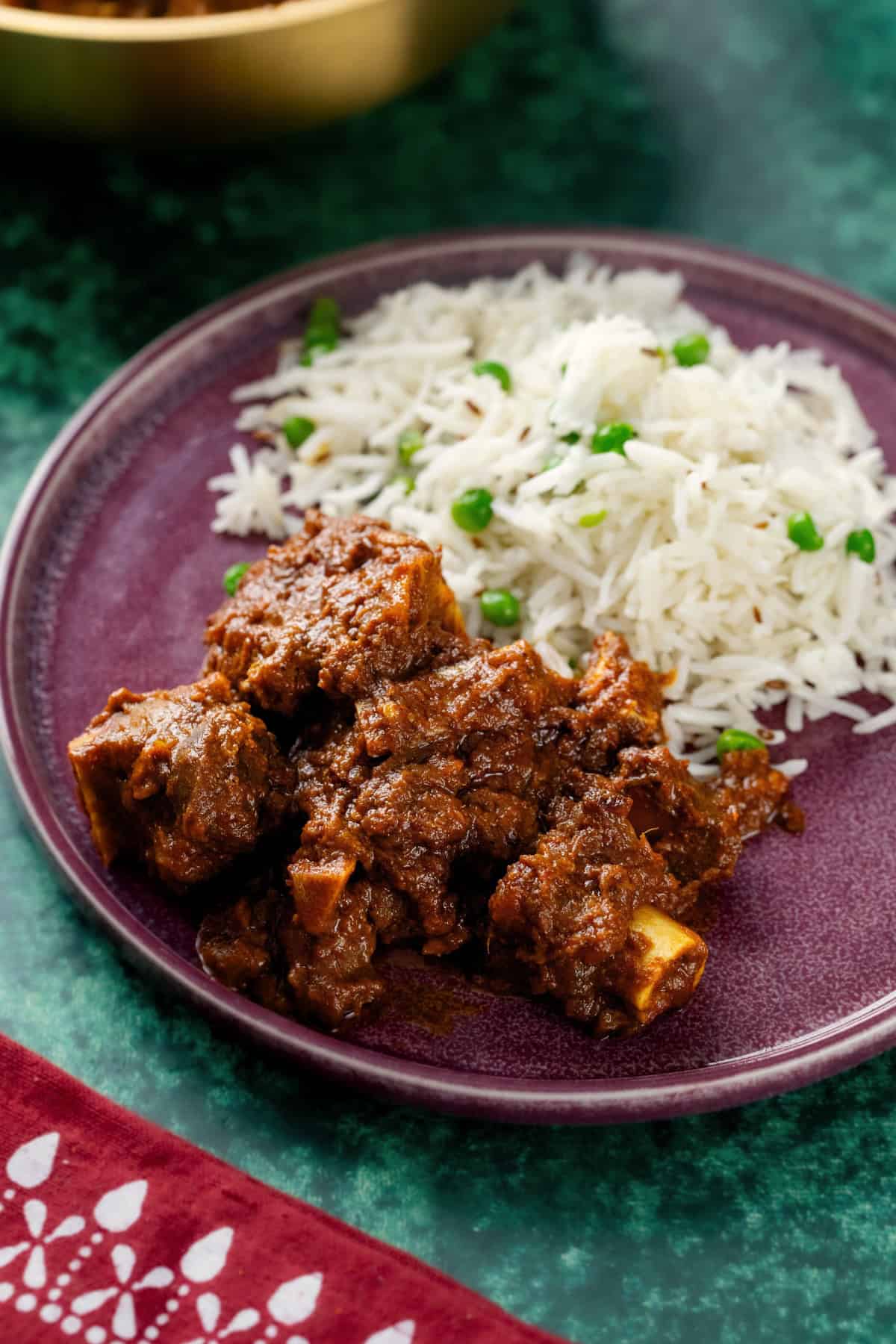
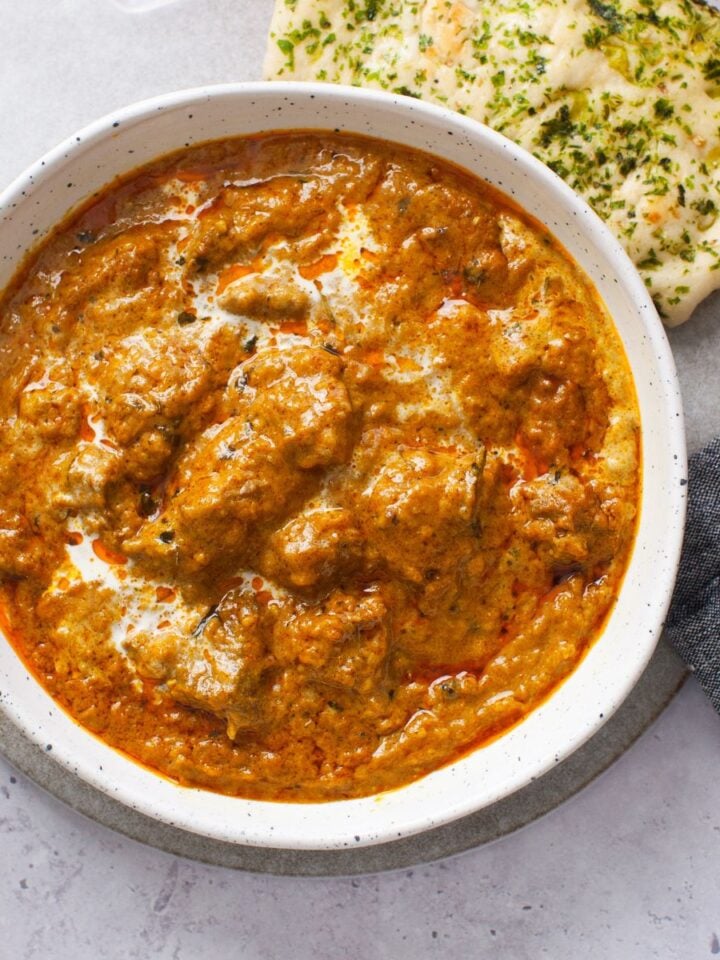
This bengali kosha mangsho is made by slowly braising tender pieces of goat meat with plenty of caramelized onions, yogurt, and aromatic spices. The magic lies in the patient koshano (bhunai), which gives the mutton curry its signature deep brown color, thick, clingy gravy, and intensely delicious flavor.Serve it with fluffy plain steamed rice for a truly satisfying meal!
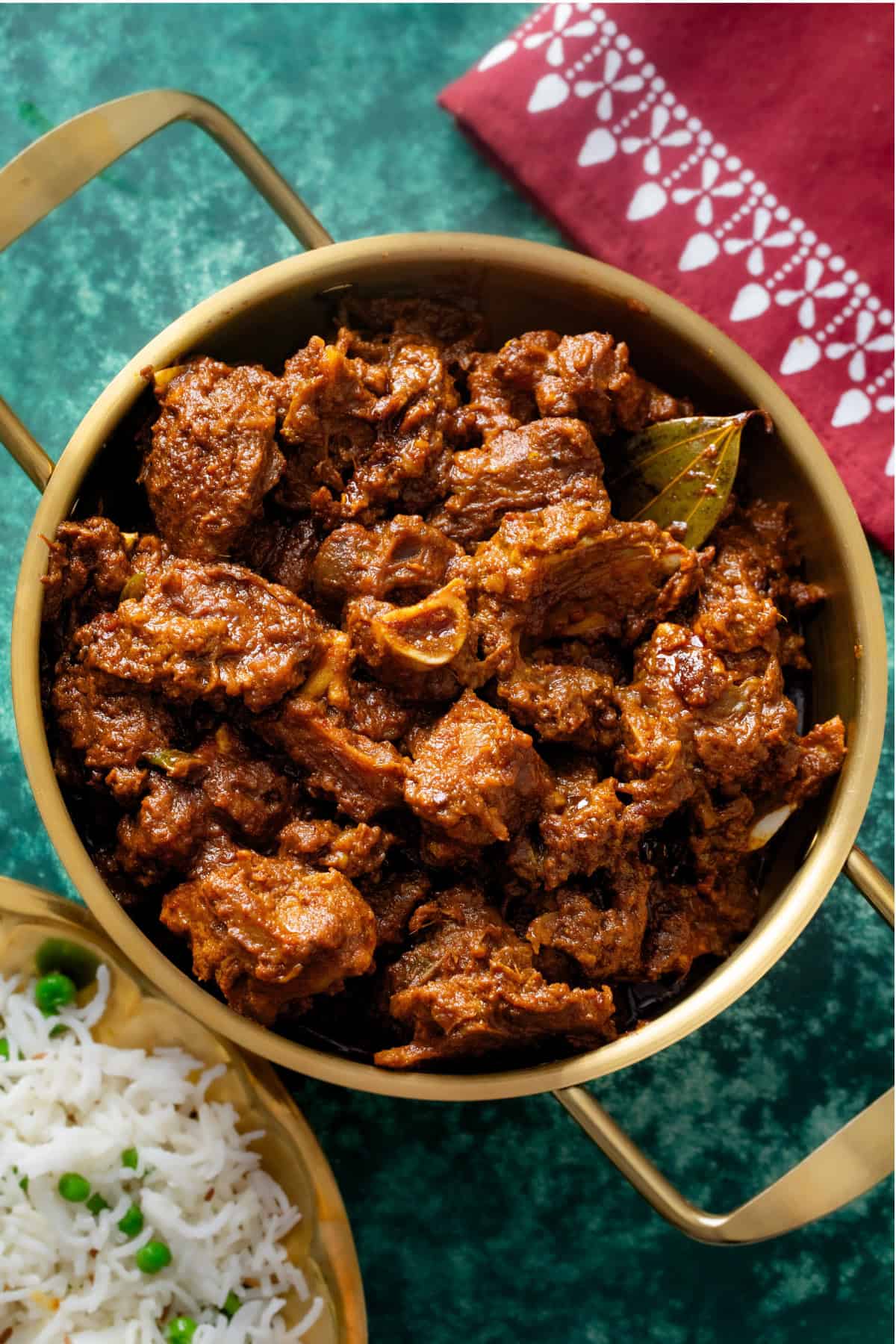
My goat curry recipe has gotten so much love from you all over the years, and this kosha mangsho uses somewhat same ingredients but the techquie is similar to bhuna gosht and hence it brings about a character of its own.
Both bhuna goat and kosha mangsho rely on bhunai or slow & intentional stirring of meat with spices. Kosha mangsho takes the bhunai much farther, with repeated stirring of meat with a large qunatity of onions, till we get the characteristic deep brown color and a complex flavor profile.
Pure virgin mustard oil is at the heart of Kosha Mangsho. We use raw mustard oil while marination and then for cooking.You heat the mustard oil till it loses most of its raw sharpness and once the meat cooks in it, it gets a slightly earthy pungent backbone. If you cannot source mustard oil, use half ghee & half peanut oil (for its mild nutty taste).Don't use olive oil or avocado oil.
Your Onions Matter A LoT!
The reason is moisture. American onions, red or yellow, hold more water than Indian ones, and thick slices take much longer to cook that water off before any browning can begin. Thin slices (3 to 4 mm thick) shed their water quickly, collapse into the masala, and brown evenly, which gives you the jammy base that kosha mangsho needs.
Thick onion slices also tend to stay distinct in the final gravy, so you end up with onion pieces sitting in the sauce rather than a masala that clings to the meat. That's the opposite of what you want in a kosha.
You will notice an inherent sweetness in taste of kosha mangsho. That's the onions lending a sweetness to Kosha mangsho in the background while the red chilli powder and spices infuse aroma and heat. To bring forward this balance of sweet, spicy and savory, you need good 3.5 to 4 hours to slow cook kosha mangsho.
Koshano Tips I Swear By
- Unlike my chicken recipes, I don't always marinate mutton for long. Meat has plenty of flavor of its own, and I like to make the most of it while saving time. While some prefer to marinate mutton overnight for kosha mangsho, I simply coat it with yogurt and spices and let stand on kitchen counter for a couple of hours to bring it closer to room temperature. This prevents the yogurt from curdling and the mutton cooks to beautifully tender.
- Your cooking pot matters. Since there is a lot of stirring and simmering, it is best to a ahevay
- Don't add a lot of water at once. Adding water slowly is the essence of "koshano" technique. Whenever the masala begins sticking to the bottom, add a splash of hot water, scrape up the flavorful browned bits, and continue cooking. Repeating this process helps develop a deeper flavor.
- Keep in mind that the color develops gradually. Don't expect the masala to turn dark brown in the first 30 minutes. The characteristic color develops through long repeated cooking and reduction of the onion masala.
- Listen to the sound. During the first couple hours, there will be lot of bubbling as meat releases its juice. As the moisture evaporates, you will hear a more pronounced sizzling sound. That's your cue to stir more frequently and watch the heat carefully.
- Lastly, use the clock as a guide, but trust the texture. Different cuts and ages of goat meat cook at different rates. The meat should be tender enough to pull apart easily but not falling off the bone. It should hold it's shape.
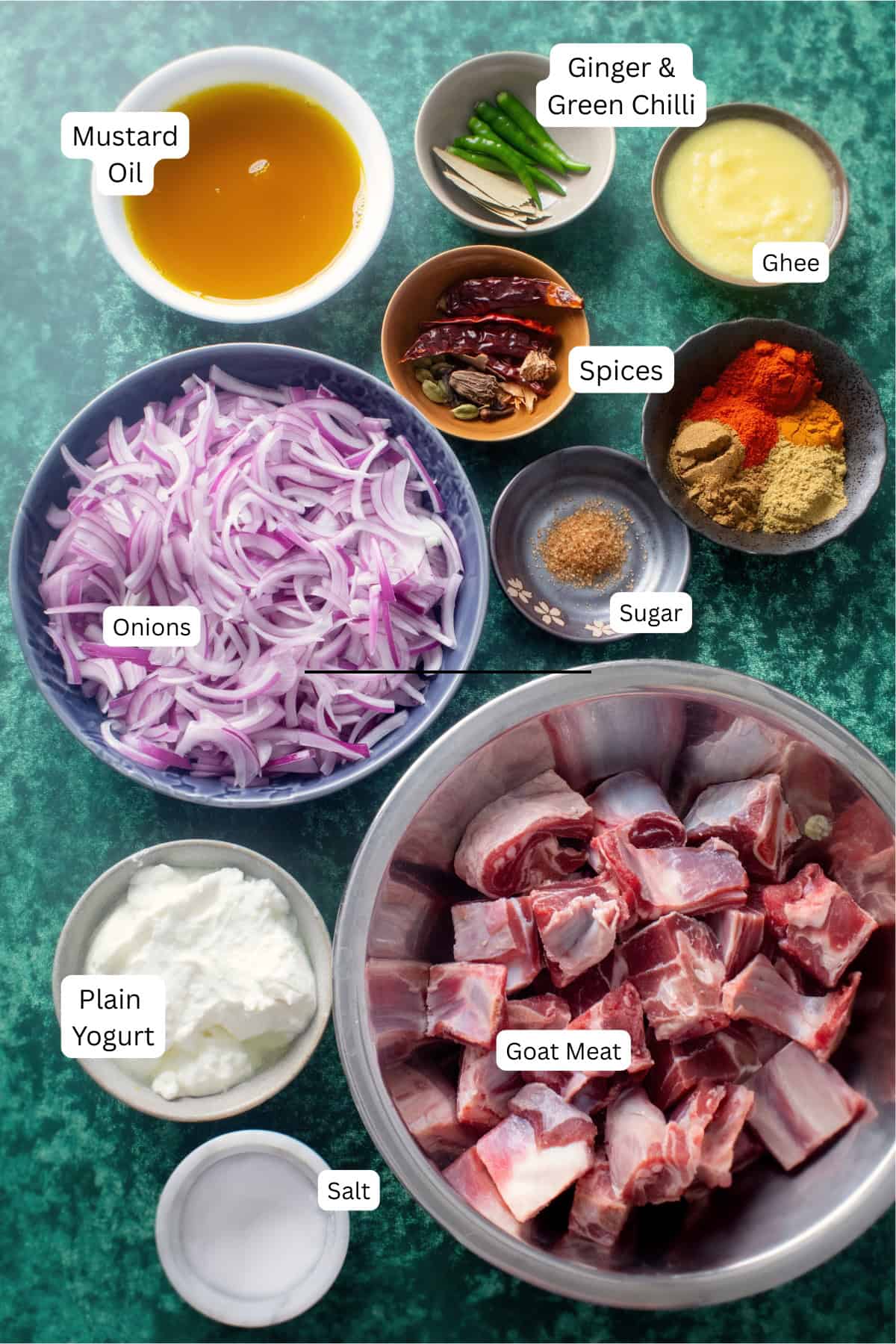
Ingredients
Instructions
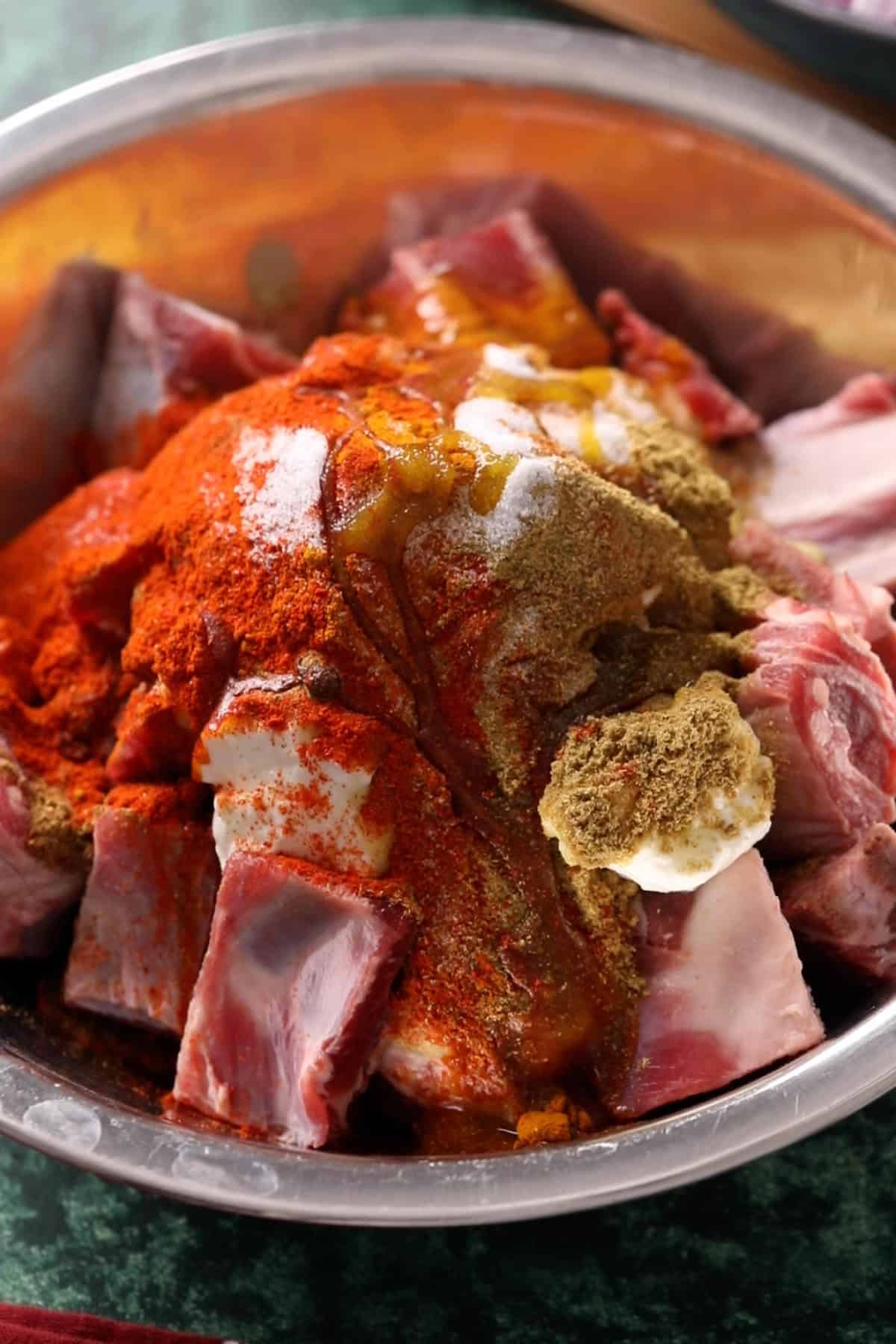
- Place the goat meat (thaw it first if using frozen) in a large bowl and add the ginger & garlic, ground spices, whisked yogurt, salt and 2-3 tablespoon of raw mustard oil.
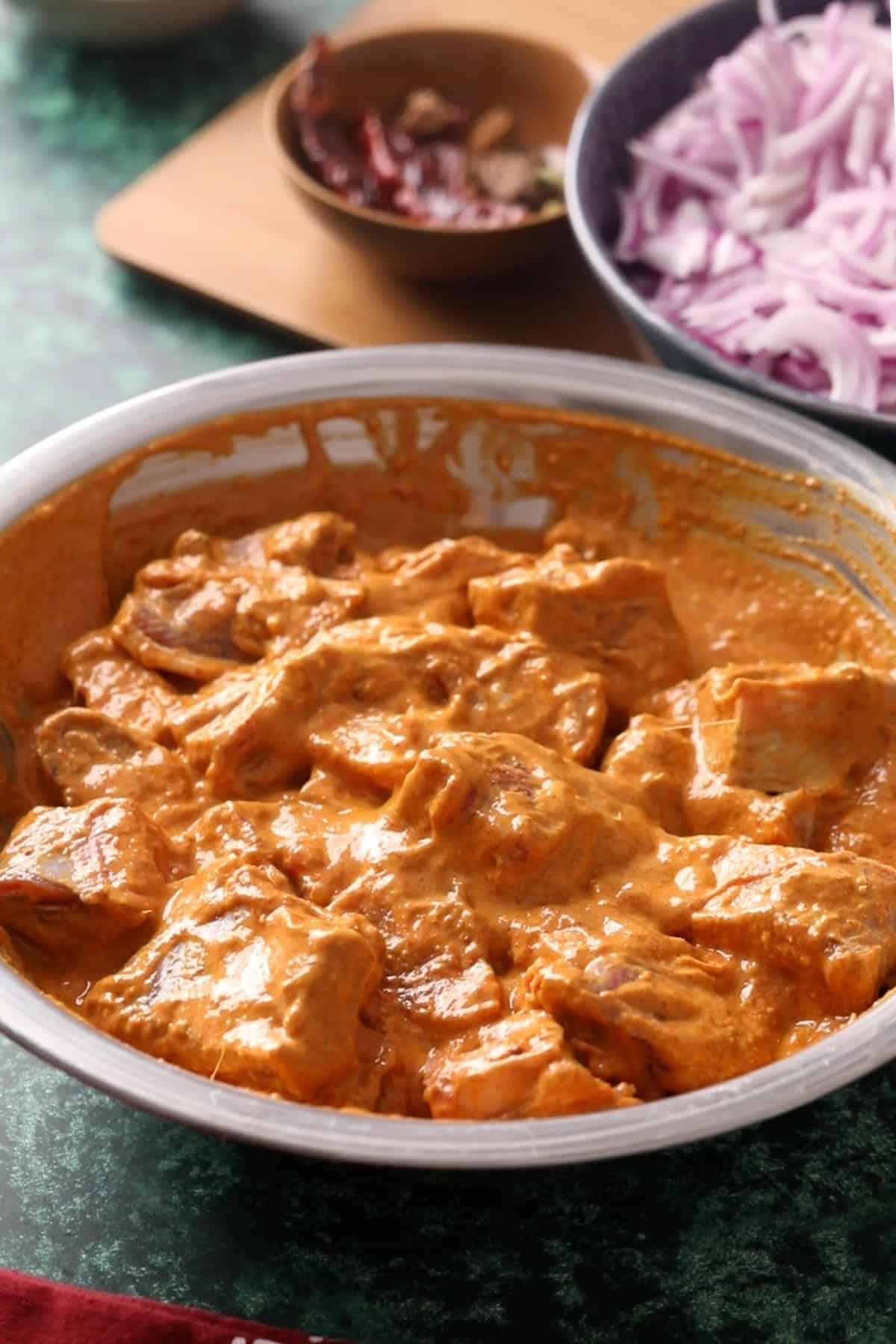
- Using your hands, nicely toss the meat such that its coated very well. Cover and set aside for 1-2 hours at least.You can marinate overnight too.
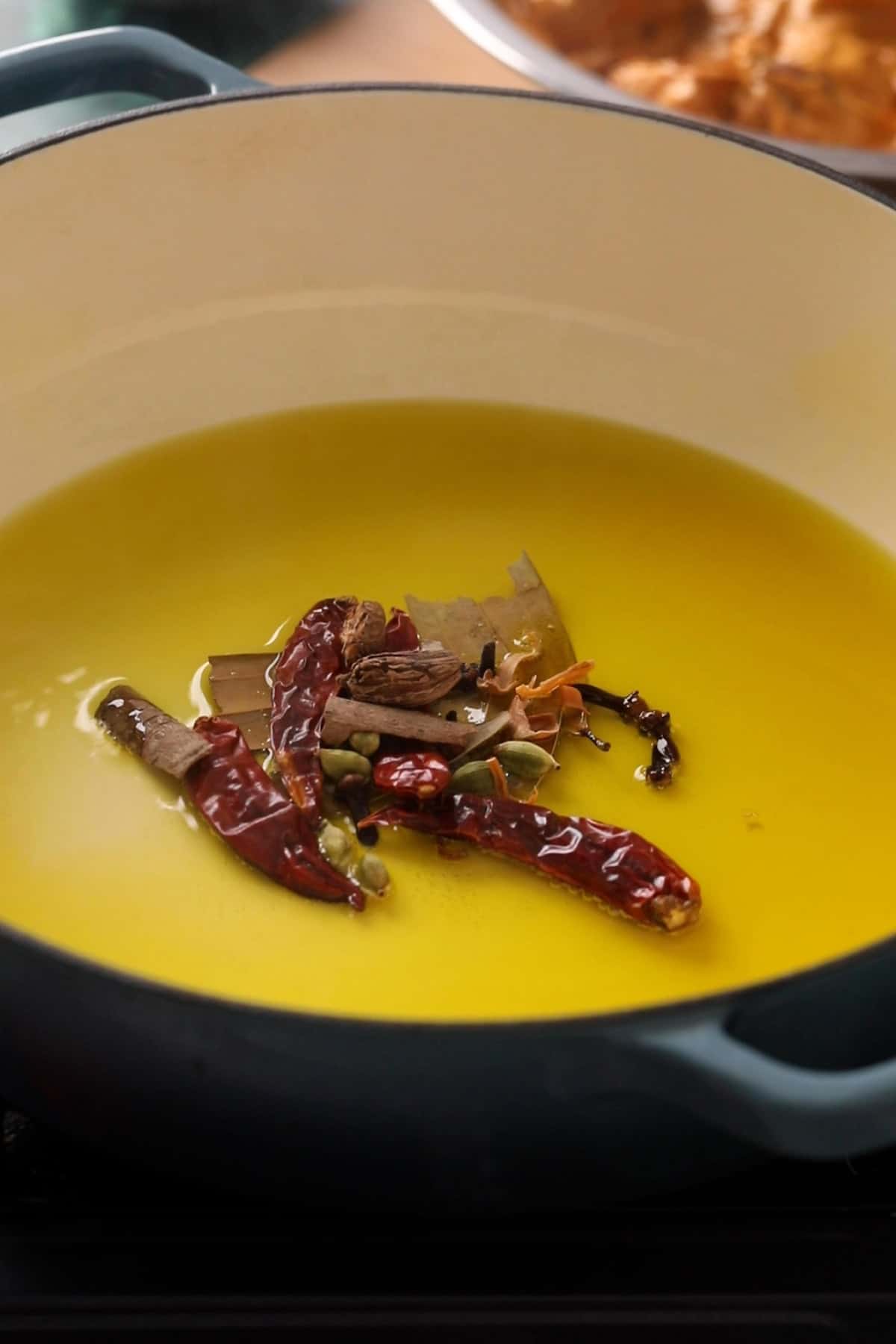
- Heat mustard oil in a heavy-bottomed pot or dutch oven on medium until it begins to smoke lightly. I use my braiser which is perfect utensil for stirring due to its wide shallow design. Lower the heat and add the whole spices & chillies to oil. Let them sizzle for 20 seconds until fragrant.
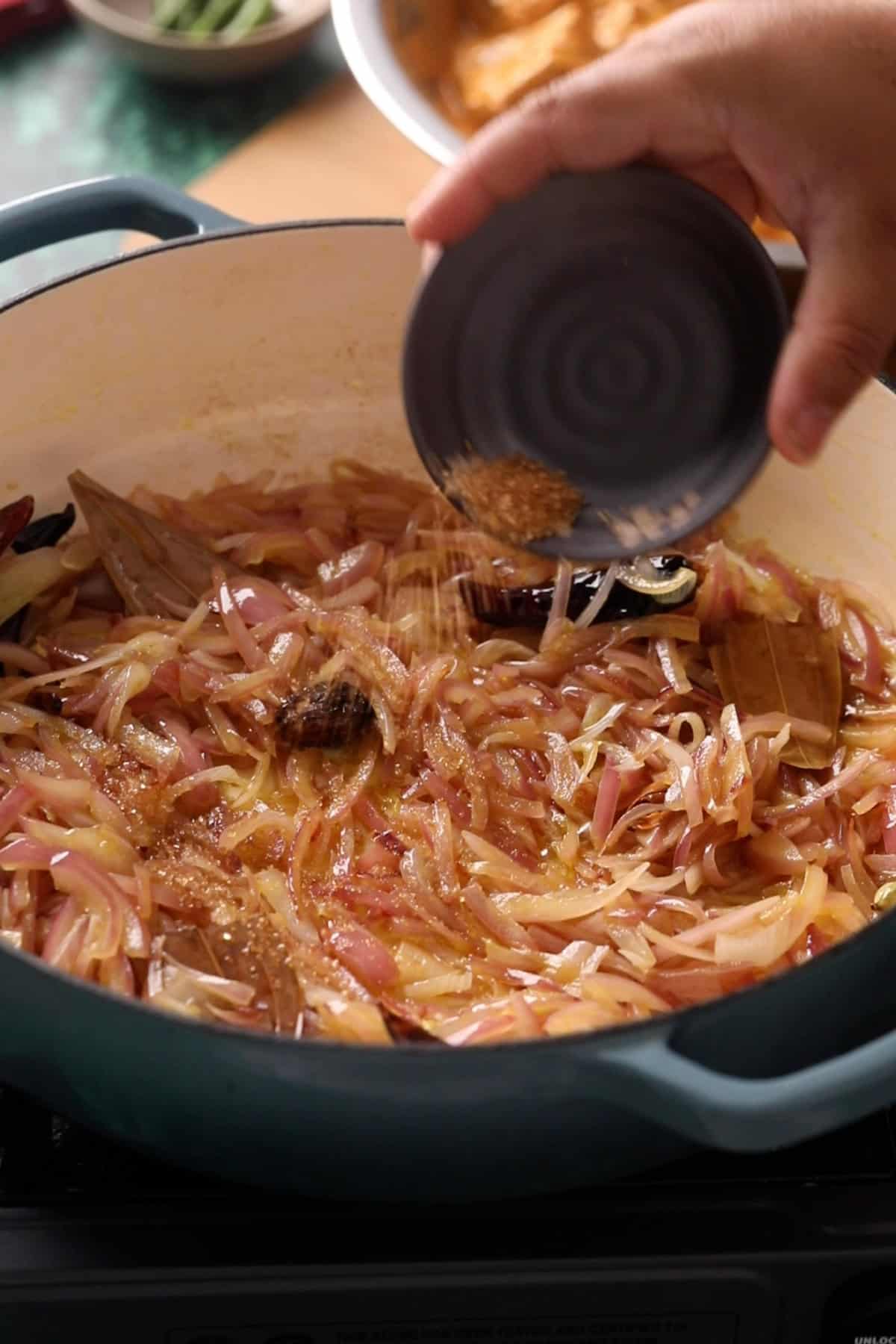
- Next, add the sliced onions and mix with spices. Keep flame on low medium. Cook the onions while stirring frequently, until they turn light brown. At this stage, sprinkle the sugar over the caramelized onions. Sugar helps in caramelization and helps enhace the deep color of kosha.
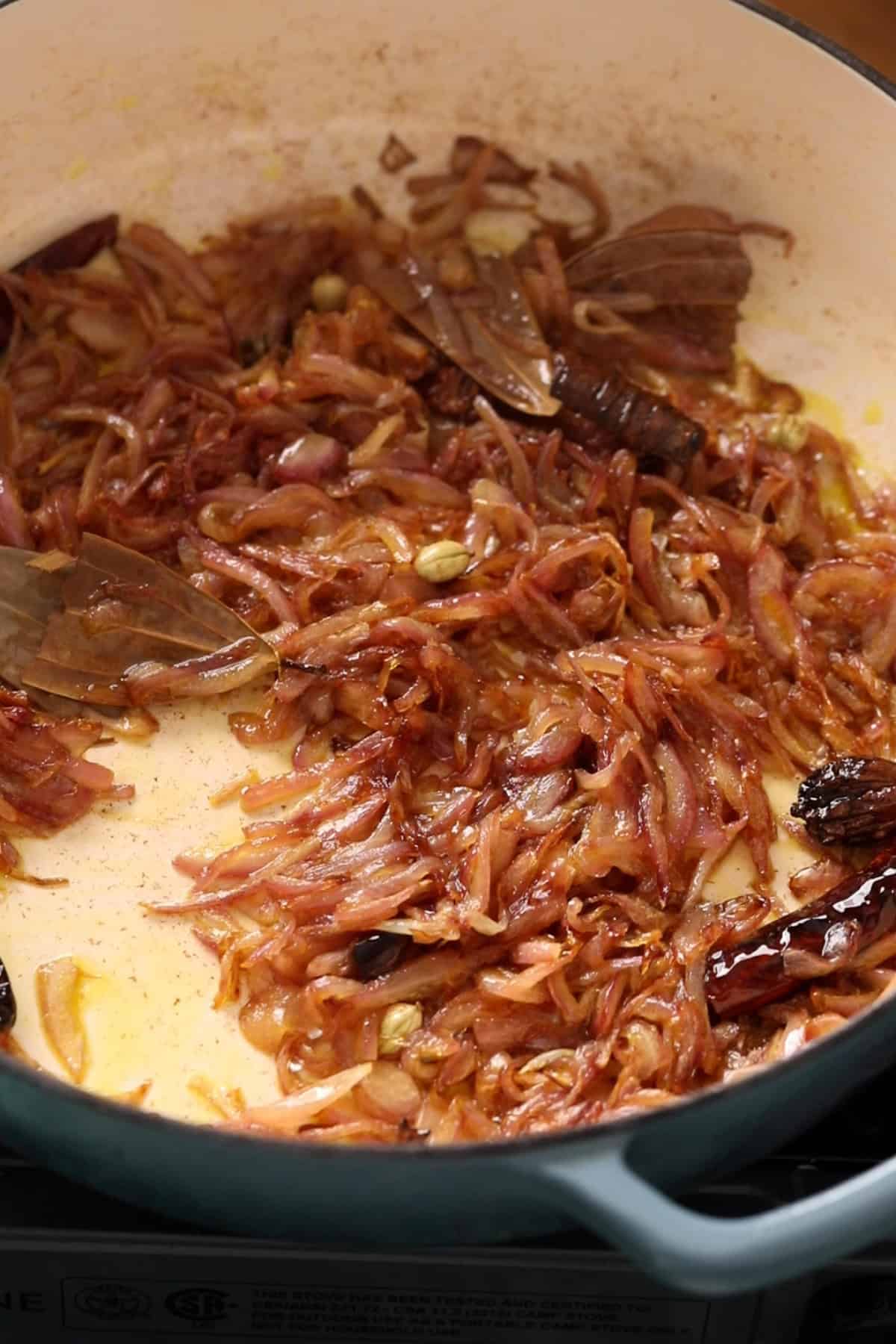
5. Keep browning the onions while intermittently stirring. Keep a close eye and adjust heat between low or medium as needed. The browning should take about 15 to 20 minutes. Don't rush this step, as the caramelized onions give Kosha Mangsho its rich color and flavor.
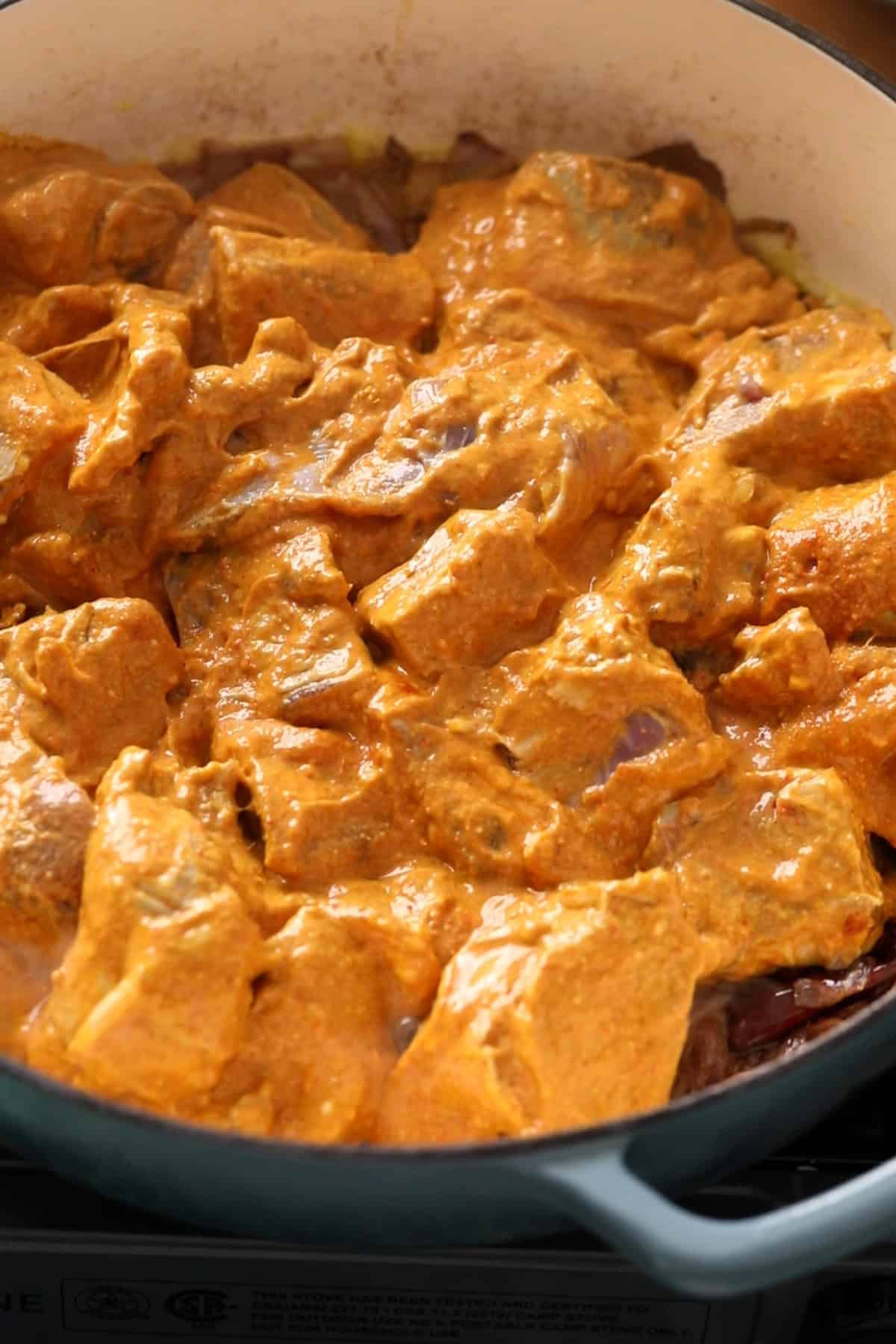
6. Transfer the marinated mutton along with, green chillies and marinade to the pot. Mix thoroughly with the onions and continue to cook over medium-low heat for 25-35 minutes while stirring frequently, until the moisture released by the meat and yogurt begins to evaporate and the masala starts thickening.
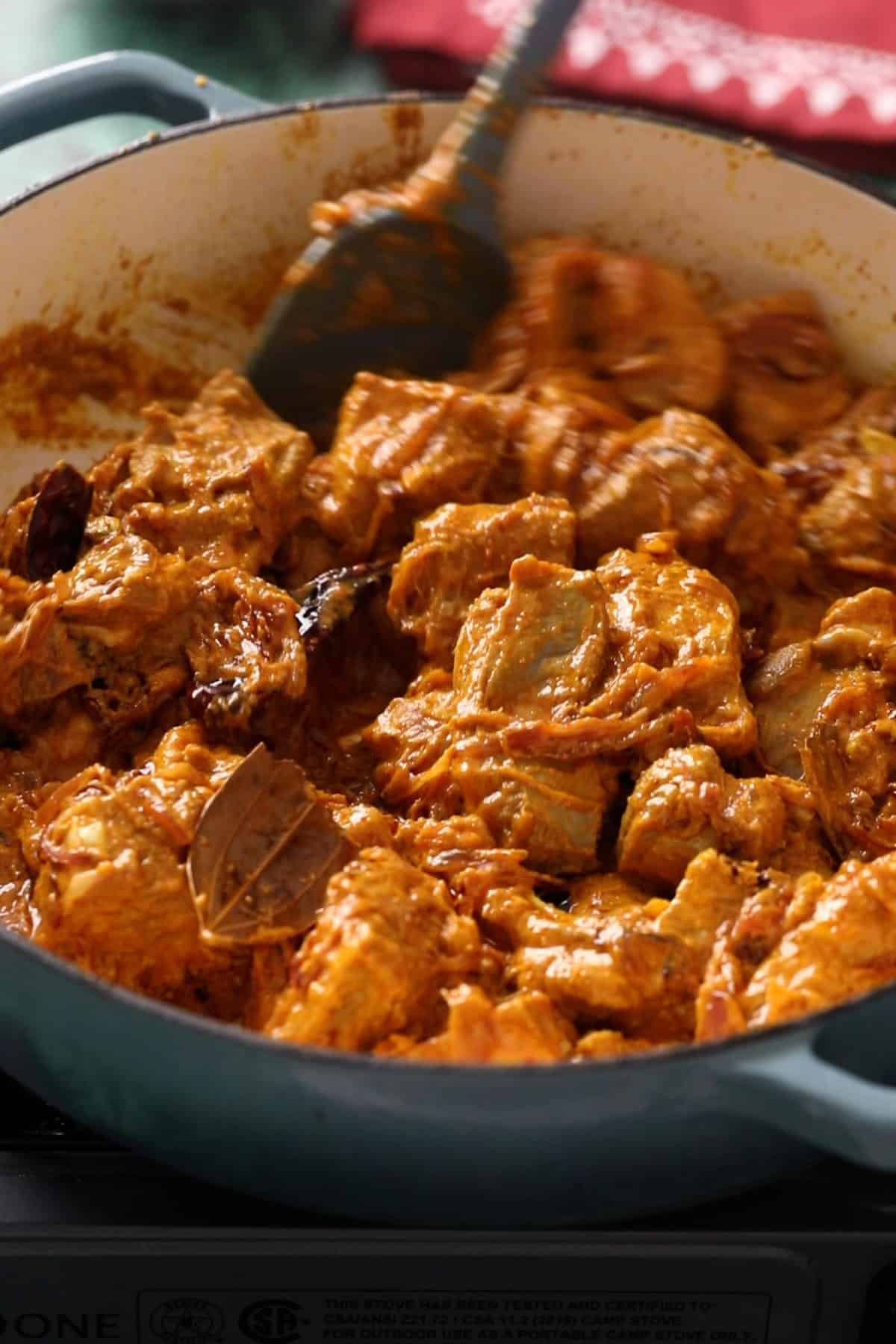
7. For the next 80 to 90 minutes, continue cooking the meat on low medium using the kosha technique. Add a small splash of hot water (about 3 tablespoons or 50 ml) at intervals of 5-7 minutes, stir well, and cover the pot for a minute.
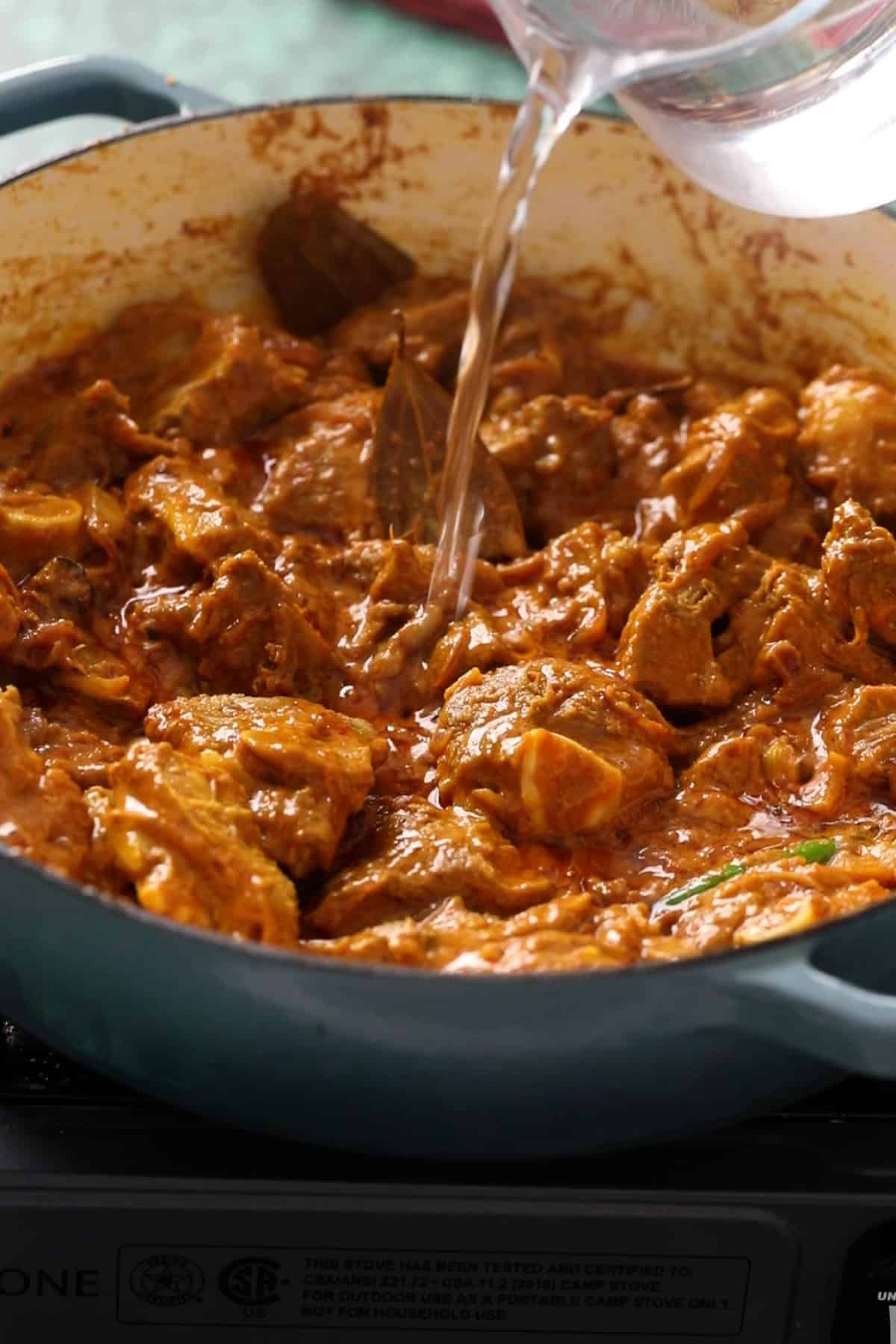
8. Uncover, stir thoroughly, and allow the moisture to evaporate before repeating. This slow, repeated process helps develop the deep reddish-brown color and rich flavor of the masala while also gradually tenderizing the meat.
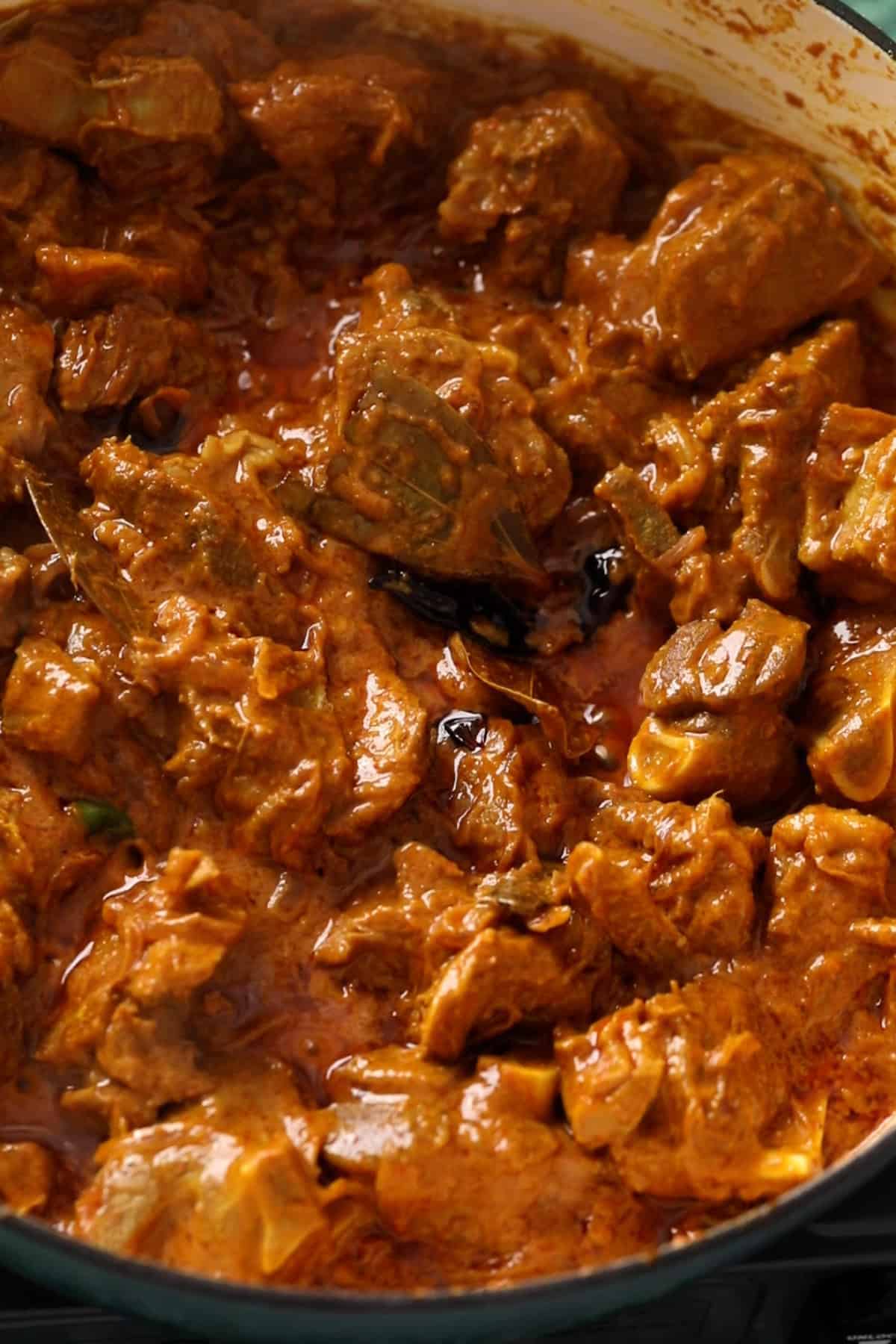
9. After 1.5 hours, pour in about ⅓ cup hot water and scrape the bottom of the pot. Cover with lid and now cook over low heat. Check in between and add small splashes of hot water whenever the masala becomes too dry. Continue cooking covered until the mutton is tender and begins pulling away from the bone. The entire kosha process can take approximately 3 to 4 hours.
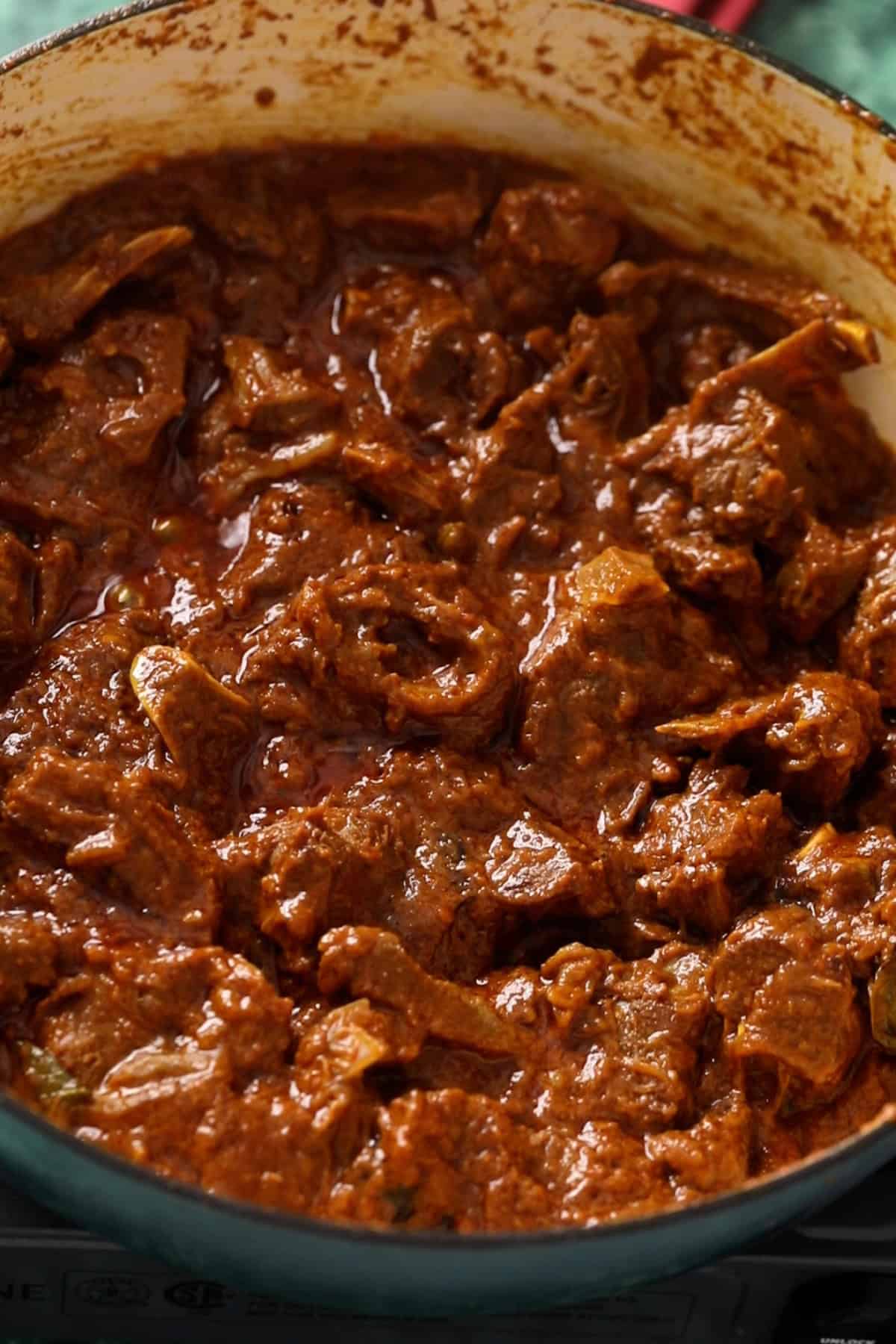
10. Once the mutton is tender, cook uncovered for another 8-10 minutes to reduce any excess liquid and give the masala a final bhunai. The finished kosha mangsho should have a thick, glossy, reddish-brown masala clinging to the meat, with a little oil separating on top. Finish with ghee and let rest for 20 minutes before serving.
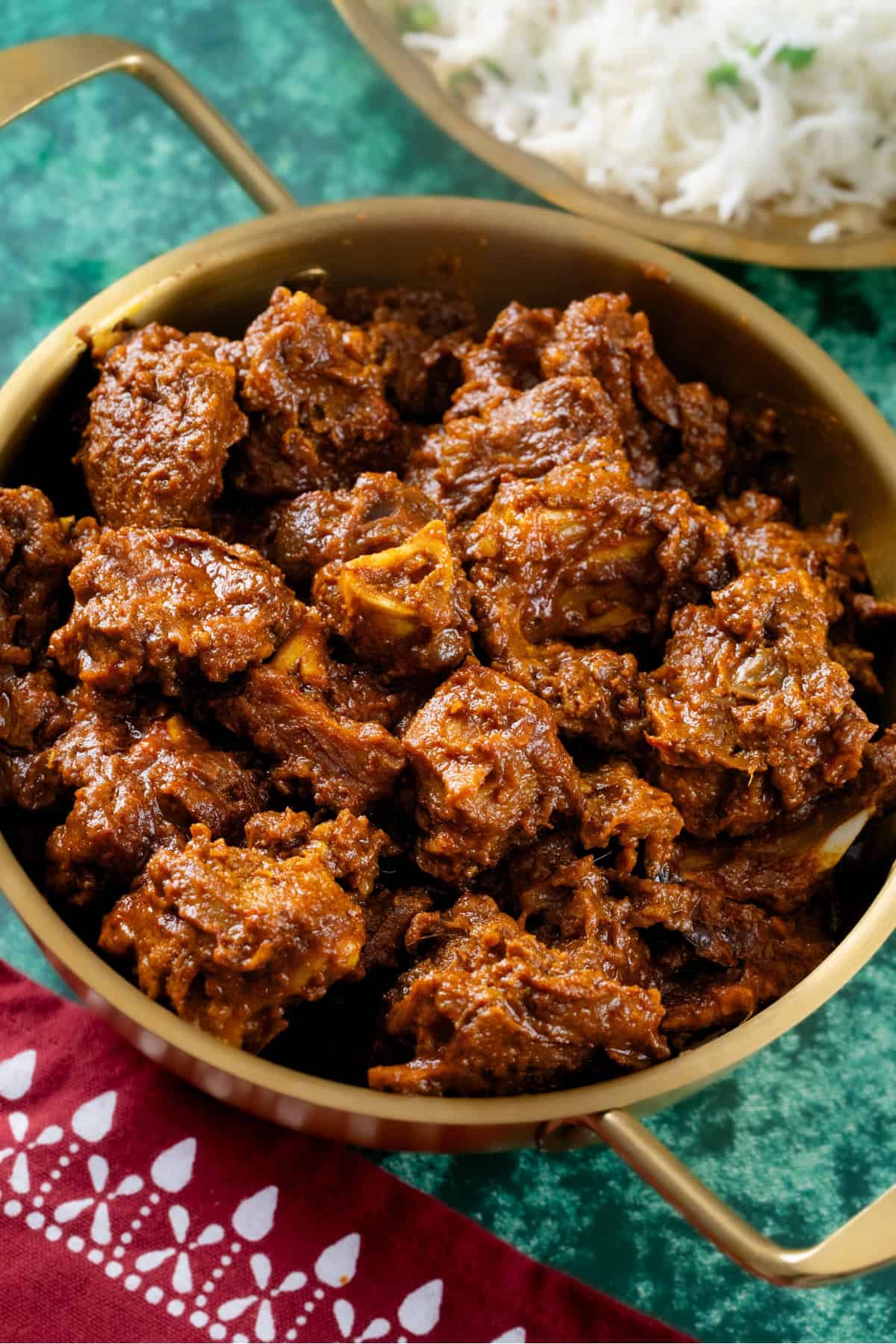
Slow-cooked Bengali Kosha Mangsho
Save The Recipe!
Ingredients
- 950 g (2 lb) goat meat or mutton bone in meat is preferable, use bone in lamb stew meat if you want to use lamb
- ⅓ cup mustard oil or use 3 tablespoon each of ghee+peanut oil
- 450 g onion thin sliced (4-5 mm thickness)
- 20 g ginger paste
- 30 g garlic paste
- 2-3 green chilies (hot!) slit into half, adjust quantity to taste
- 220 g plain whole yogurt
- 1.5 teaspoon salt
- ½ teaspoon sugar
- 1 tablespoon ghee optional, but recommended
Ground Spices
- 1 tablespoon kashmiri chili powder
- 1 teaspoon red chilli powder (extra hot!), adjust quantity to taste
- 1 teaspoon turmeric powder
- 3 teaspoon coriander powder
- 1.5 teaspoon cumin powder
Whole Spices
- 6 green cardamom pods
- 1 black cardamom pod skip if not available
- ¼ piece nutmeg crack the whole nutmeg using a nut cracker or pestle and use ¼th piece
- 3-5 twig mace
- 4 cloves
- 5 whole kashmiri chillies
- 2 small bay leaves
Instructions
- Heat the mustard oil in a wide, heavy-bottomed pot or dutch oven over medium heat until it just begins to smoke lightly. I use my 4 qt braiser for this recipe because its wide, shallow design makes it easier to stir the meat and cook the masala evenly. Once oil is ready, lower the heat and add the whole spices and dried chillies. Let them sizzle for about 15-20 seconds until fragrant, while taking care not to burn them.
- Next, add the sliced onions and toss well to coat them in the spice infused oil. Keep the heat at medium-low and cook, stirring frequently, until the onions soften and begin turning light brown. At this point, sprinkle the sugar over the onions and mix well. The sugar helps deepen the caramelization and contributes to the beautiful dark color of kosha mangsho.
- Continue browning the onions, stirring regularly to prevent them from sticking or burning. Adjust the heat between low and medium as needed. The browning process should take about 15 to 20 minutes in total. Don't rush this step and also take care that onions dont blacken. The slowly caramelized onions form the foundation of the curry and give Kosha Mangsho much of its signature color, sweetness, and rich flavor.
- Add the marinated goat meat to the pot along with all the yogurt marinade and green chillies. Mix thoroughly, turning the meat several times so that every piece is coated with the caramelized onions and spices. Continue cooking over medium-low heat for next 25 to 35 minutes, while stirring frequently. The meat and yogurt will gradually release moisture, which will begin to evaporate as the masala cooks. Keep stirring and scraping the bottom of the pot until the masala begins to thicken and starts clinging to the meat.
- Now begin the slow kosha process. For the next 80 to 90 minutes, continue cooking the meat over low to medium-low heat. Every 5 to 7 minutes, add a small splash of hot water (about 3 tablespoons or 45 to 50 ml), stir well, and cover the pot for about a minute. Uncover, stir thoroughly, and let the added moisture evaporate before repeating the process. This repeated cooking, stirring, and reduction is what gives Kosha Mangsho its characteristic deep reddish-brown color and concentrated flavor. Keep the heat gentle so the masala browns gradually without burning.
- After about 80 to 90 minutes of kosha, add approximately ? cup to ½ cup of hot water and scrape the bottom of the pot to release any flavorful browned bits. Cover with a lid, reduce the heat to low, and continue cooking until the goat meat becomes tender. Check occasionally, stirring and adding small splashes of hot water whenever the masala looks too dry or begins sticking to the bottom. Avoid adding too much water at once, as Kosha Mangsho is meant to have a thick masala rather than a runny gravy. Depending on the cut and age of the goat meat, the entire cooking process can take approximately 3 to 4 hours.
- Once the meat is tender and begins pulling away from the bone, remove the lid and cook uncovered for another 8 to 10 minutes, while stirring frequently. This final bhunai helps evaporate any remaining excess moisture and brings the masala together. Keep the desired texture of meat in mind as you finish cooking. The meat should not fall off the bones. But it should be soft enough to pull away with fingers. The finished Kosha Mangsho should have a thick, glossy, reddish-brown masala coating the meat, with a little oil beginning to separate around the edges.
- Finish with ghee and gently mix it into the meat. Turn off the heat, cover the pot, and let the Kosha Mangsho rest for about 20 minutes before serving. This allows the meat to settle and the flavors to come together beautifully.

I'd Love to Hear from You!